| Audience | Marketers, data teams |
| Prerequisites | At least two audiences built using the same parent model |
Priority lists control which audience takes precedence when users qualify for more than one. When audiences overlap, Hightouch syncs each user only to their highest-priority audience — preventing duplicate messages and ensuring each person receives the most relevant campaign.
Overview
Users often qualify for multiple audiences based on buying behavior, demographics, or lifecycle stage. If you run campaigns targeting each of those audiences, the same person can receive multiple messages — a winback email, a loyalty offer, and a re-engagement ad all in the same week.
Priority lists solve this by assigning a rank to each audience. When a user qualifies for more than one audience in a priority list, Hightouch syncs them only to the highest-ranked audience. Priority is evaluated at sync time, so as users move in and out of audiences, their priority assignment updates automatically.
When to use a priority list
Use a priority list when you have audiences that overlap and you want to guarantee each user receives only one campaign. This is common for lifecycle campaigns where a user might qualify for multiple stages simultaneously (for example, both a "trial expiring" and "hasn't activated" audience).
If you just need to remove specific users from an audience — like excluding recent purchasers from a prospecting campaign — use audience exclusions instead. Exclusions remove users from a single audience; priority lists rank users across multiple audiences.
Create a priority list
-
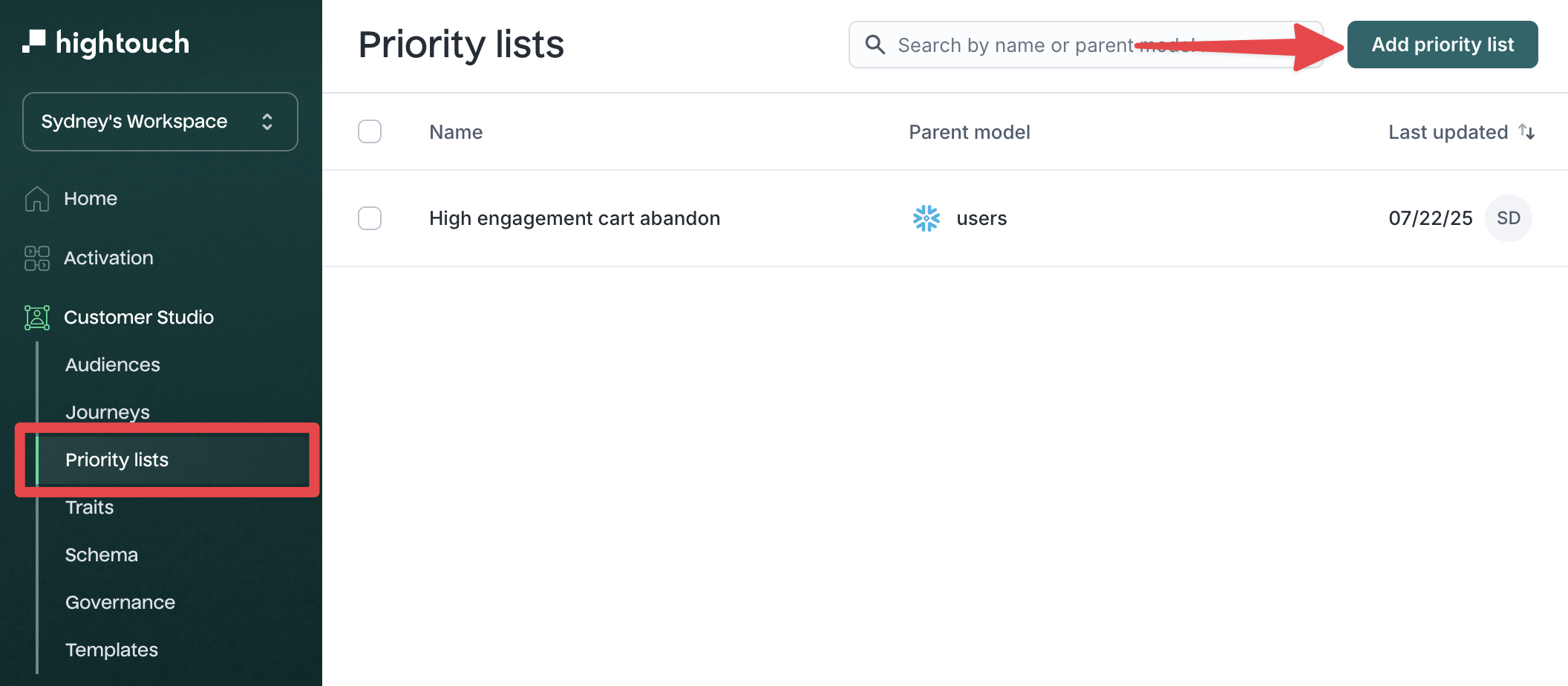
Go to Customer Studio > Priority lists.
-
Click Add priority list.
-
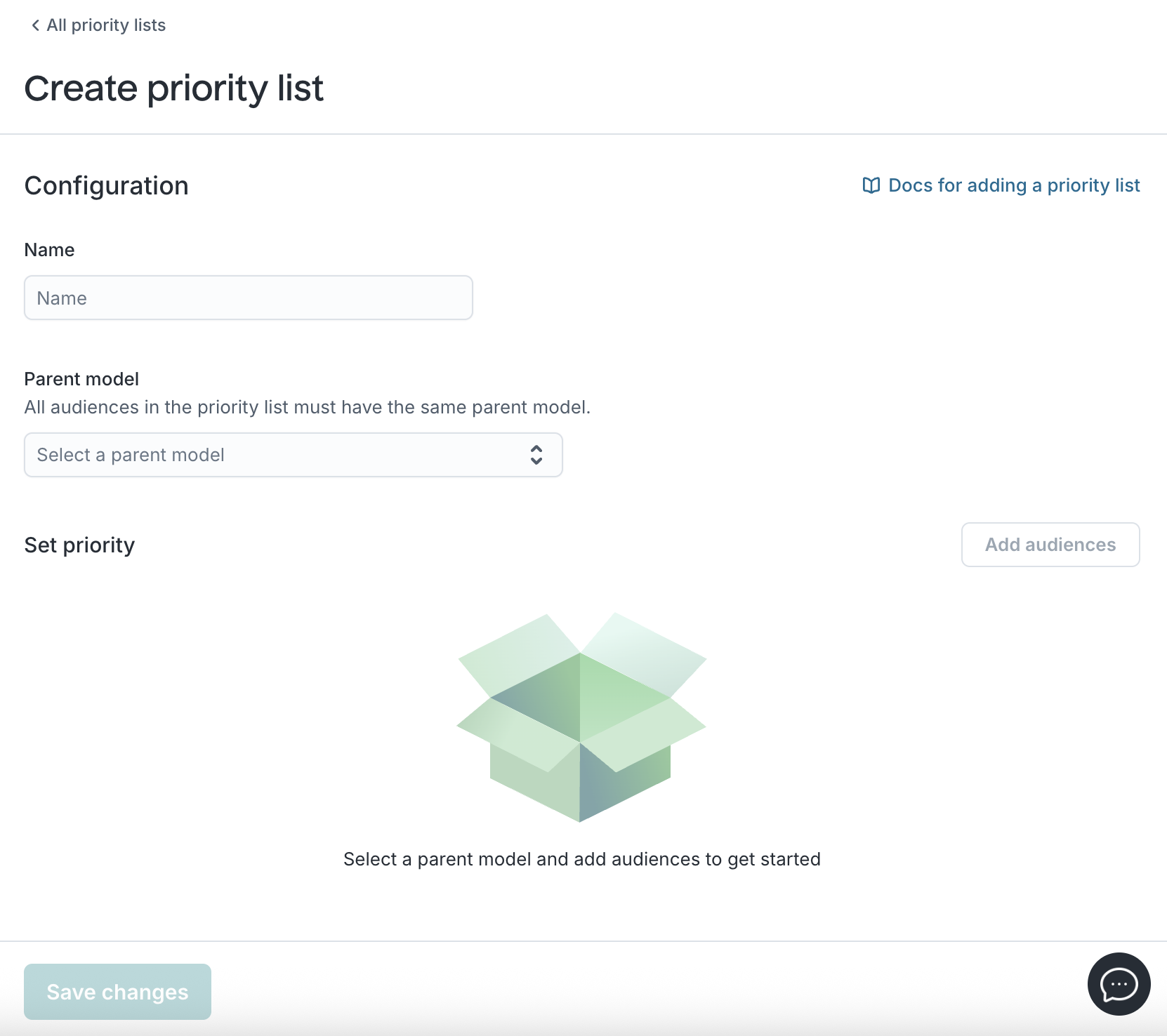
Enter a Name and select a Parent model. All audiences in the priority list must share this parent model.
-
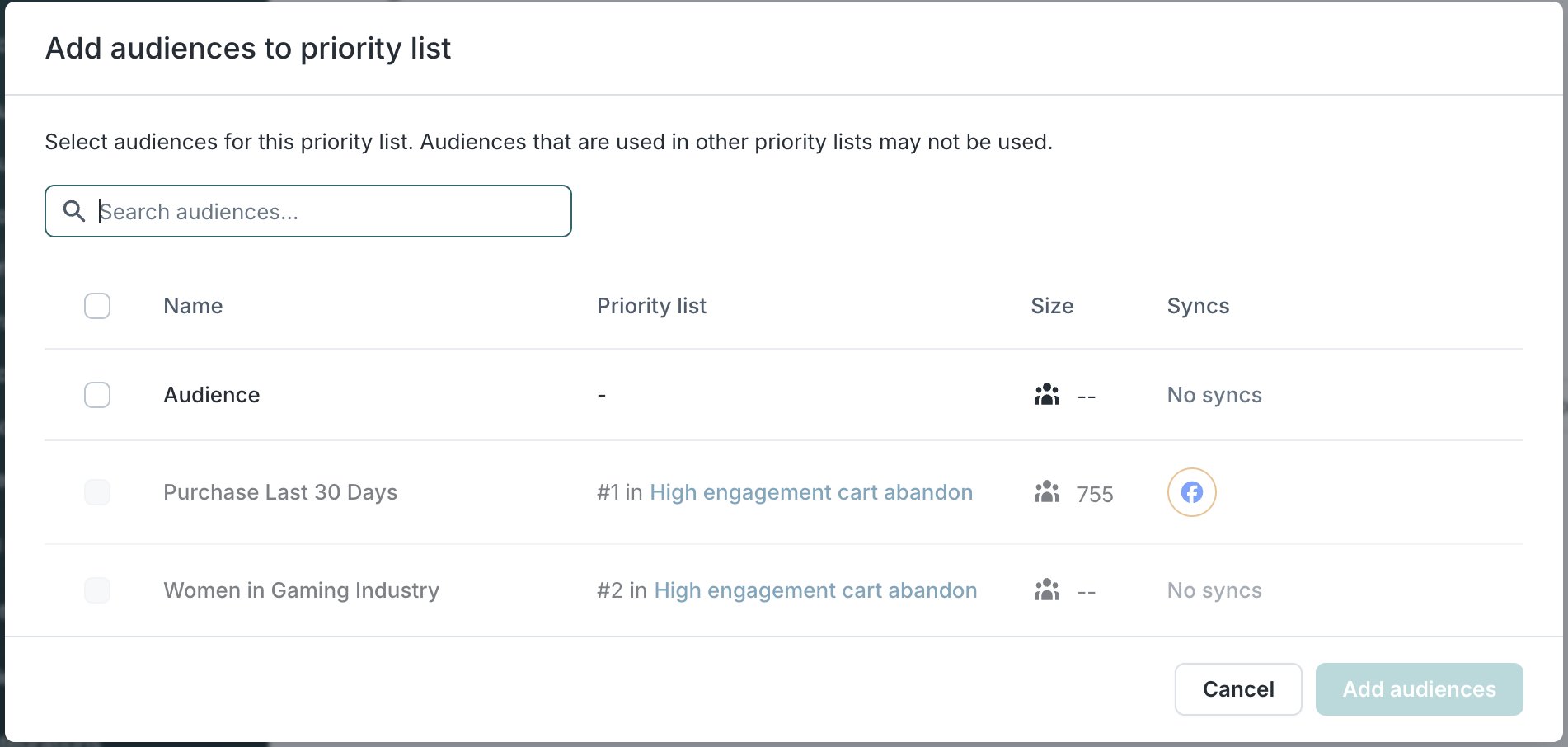
Click Add audiences to open the audience picker.
-
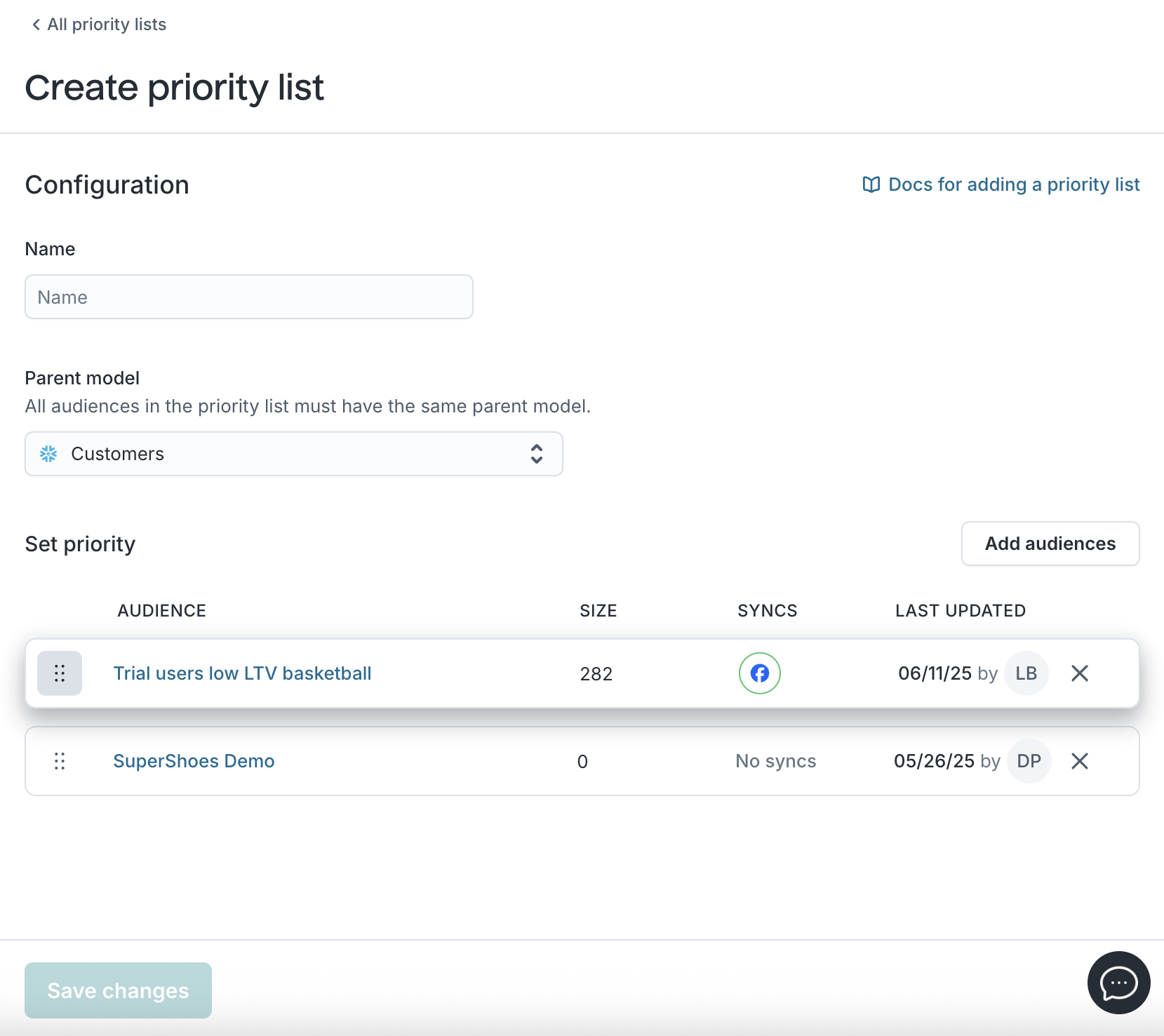
Drag audiences into the desired priority order. The audience at the top has the highest priority.
-
Click Save changes.
You can return to this page anytime to reorder audiences or add new ones.
Constraints
- Each audience can belong to only one priority list. If you need an audience in a second list, create a duplicate audience.
- All audiences in a priority list must use the same parent model.
How priority lists affect other features
Journeys
If a journey's entry audience belongs to a priority list, the priority is respected when determining who enters the journey. For example, if Audience B is ranked below Audience A and a user qualifies for both, the user enters only Audience A's journey. They won't enter Audience B's journey until they drop out of Audience A while still qualifying for Audience B. See coordinating overlapping journeys for details.
Insights
Audience insights — including breakdowns and overlap analysis — take priority list membership into account. When you view overlap between two audiences that share a priority list, the numbers reflect the post-priority assignment, not raw qualification.