| Audience | Platform admins |
| Prerequisites |
|
Destination rules filter which records can sync to a specific destination, without changing who's in the audience.
How destination rules work
Destination rules add filtering on top of an audience at sync time. They don't change audience membership — only which of those members reach a given destination.
The most common use is enforcing consent. For example, you can exclude users who haven't opted in to email or a specific ad platform, so unconsented records never sync to that destination.
Create a destination rule
- Go to Customer Studio > Governance, then open the Destination rules tab.
- Select a parent model.
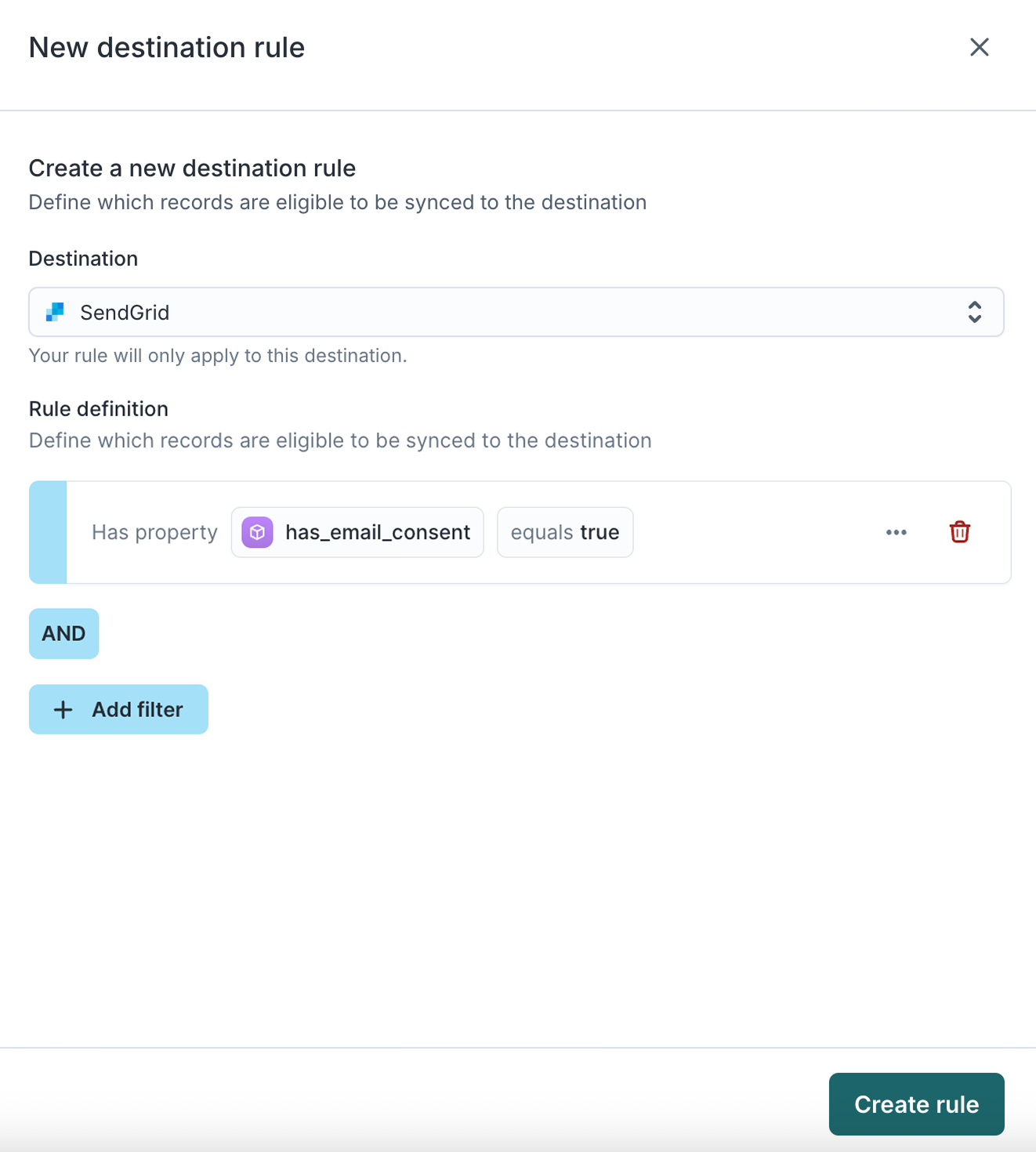
- Select Add destination rule.
- Select a destination.
- Select Add filter to define which records are eligible to sync.
The filter builder uses the same conditions as the audience builder, including nested AND/OR logic.
Preview a rule's impact
Before you sync, preview how a rule changes an audience's size and membership. The preview is available while you create an audience and from a saved audience's Definition tab.
Select the Preview a destination dropdown and choose a destination that has a rule. Hightouch applies the rule and updates the preview.
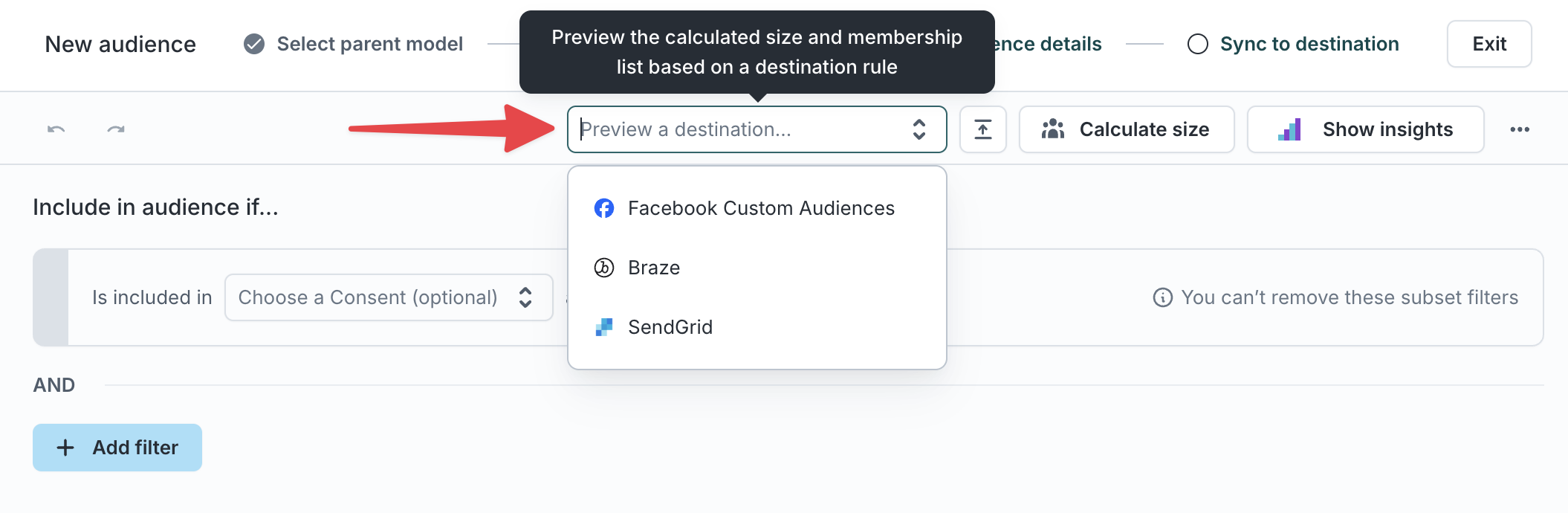
The preview doesn't change the audience. It shows only how the rule would affect syncing to that destination.
How rules apply to syncs
When you sync an audience to a destination that has a rule, Hightouch excludes the rows that don't meet the rule at sync time. Every future sync to that destination applies the rule automatically.
Excluded rows still belong to the audience. They're unaffected everywhere except syncing, so they still appear in previews, Insights, and other Customer Studio features.
Next steps
- Sync audiences to activate an audience once its destination rules are in place.
- Subsets to restrict which records a user can work with, not just which can sync.
- Data masking to hide sensitive column values from users who can otherwise see the record.