Automation is incredibly freeing for performance marketers. For the first time, they can offload the tedious work of tweaking bids, budgets, and placements to AI. But doing so successfully requires a different kind of effort: feeding the best data and signals into the algorithms, so marketers can trust that what they're automating actually works.
This shift has introduced a new discipline that's becoming critical for performance marketing teams: signal engineering. Rather than manually tuning campaigns, marketers must now focus on designing the conversion signals that teach these AI algorithms what success actually looks like for their business.
What is signal engineering?
AI optimizes for whatever signals you give it, so the quality matters tremendously. Signal engineering is the practice of capturing, modeling, and transmitting high-quality conversion signals back to advertising platforms so the AI algorithms can more effectively optimize for the outcomes that matter to your business, not just the conversions that are easiest to capture.
Signal engineering involves designing outcome proxies (like predicted lifetime value) and reporting them back to ad platforms. These signals become the training data that platforms use to identify valuable audiences, optimize creative combinations, adjust bids, and allocate budget across campaigns.
The stakes are high. Platforms optimize for whatever signal you give them. Send a generic "purchase" event, and they'll chase purchase volume — regardless of whether those purchases drive profit, retention, or lifetime value. Signal engineering shifts the target. Instead of optimizing for activity, you're optimizing for financial outcomes: the conversions that actually grow the business.

Why signal engineering matters now
There are always new terms in marketing, but this isn’t about a trendy buzzword. The term is a response to fundamental changes in how advertising works.
Performance Max, Advantage+, and other automated campaign types now represent a growing share of digital ad spend. These tools consolidate audience targeting, bidding, and creative optimization into a single automated system powered by AI algorithms so that marketers no longer have to do it manually. The platform decides based entirely on the conversion data you provide.
In this new environment, performance marketers are doubling down on a few key surface areas to move the needle: budget allocation, creative, and signal engineering. But signal engineering is often the most underutilized of these levers—even though it could potentially make the most impact. Better conversion signals can lift attributed conversions by up to 24%, lower cost per acquisition by 13-15%, and significantly improve ROAS, according to studies from Meta and Google (study 1, study 2. The difference comes down to data quality: platforms that receive rich, accurate signals about valuable conversions can target similar audiences more effectively.
The anatomy of strong signals
The difference between mediocre and exceptional signal engineering comes down to three elements: completeness, business alignment, and timeliness.
Complete signals include rich customer context A bare-bones conversion event, like "user purchased,", gives the algorithm almost nothing to learn from. Strong signals, on the other hand, bundle multiple data points: the conversion event, customer identifiers for matching (e.g., hashed email, phone, address), transaction value, and behavioral context (e.g., first purchase vs. repeat, product category). The more complete your signal, the more effectively platforms can identify similar high-value users.
Business-aligned signals optimize for what matters The more your conversion signals match the financial outcomes you care about, the more likely you are to achieve them. Whether your business cares about gross revenue, profit, lifetime value, or lead quality, your conversions should closely reflect those outcomes.
In some cases, this can mean predicting outcomes before they happen. Business-aligned signals incorporate metrics like contribution margin, predicted customer lifetime value, or lead quality scores, which teach platforms to optimize for long-term outcomes rather than vanity metrics. This can and should change depending on the industry: For e-commerce, for example, it could mean factoring in repeat purchase probability or profit per transaction.
Timely signals arrive within attribution windows Most ad platforms require you to send conversion events within 7-30 days of the original impression or click, even if the financial outcome takes longer to complete. Many valuable results, like subscription renewals, repeat purchases, and closed deals, happen weeks or months after the initial click. That's when predictive signals become valuable. Instead of waiting 90 days to report actual LTV, AI can predict LTV based on early indicators and report it within the attribution window. The platform learns to target users likely to become valuable customers, not just users likely to convert immediately.
Building your signal engineering system
Implementing signal engineering means connecting your data infrastructure to ad platform optimization engines. Here's how:
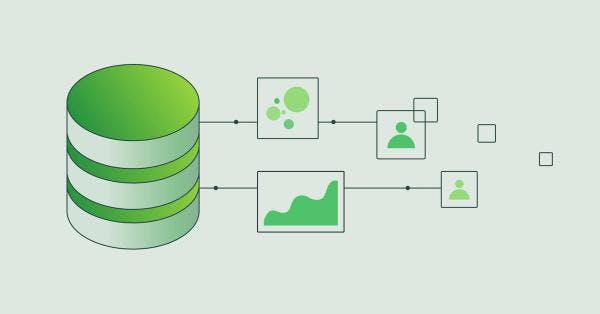
Start with your data warehouse Your warehouse contains the raw materials for sophisticated signals: conversion events, customer identifiers, financial data, and predictive machine learning models.
Define your value proxy What does a "valuable" customer look like for your business? For subscriptions, this could be users who remain active past 90 days; for e-commerce, customers whose second purchase happens within 30 days; for B2B SaaS, leads from target accounts with strong intent signals. Identify the early indicators that predict these outcomes. These become your engineered signals.

Build or buy predictive models For conversion events that fall outside the attribution window, use predictive ML models, lead scoring algorithms, or churn probability classifiers to calculate a predictive value for each conversion. Then send the event earlier in the customer lifecycle, like when a form is initially submitted. You can also consider creating synthetic conversions, allowing you to wait longer to collect valuable information that could improve your predictive model’s accuracy.
Use an in-house model if you have a data science team, or work with a warehouse-native CDP that supports predictive modeling. If you’re just getting started, consider using simple threshold-based logic by assigning static values to conversion categories, like "first purchase >$100" or "demo requested from enterprise account." Start simple and add sophistication as you prove ROI.
Activate through Conversion APIs Use a warehouse-native data activation platform to automatically sync engineered signals from your warehouse to ad platforms. Set up real-time or near-real-time syncs so platforms receive conversion data quickly enough to inform ongoing optimization.
Test and refine continuously Run holdout tests or geo-split experiments to measure incremental lift. Monitor match rates and evaluate based on the downstream business metrics (like LTV, retention, and profit) that you’re trying to improve. Use these insights to iterate: adjust event definitions, recalibrate predictions, or introduce additional signals.
Evolving your signal engineering practice
Signal engineering maturity develops in stages as you build confidence and prove ROI.
Stage 1: Server-side conversion tracking. Track and send simple Conversion API events that align with the primary stages of the customer journey, like purchase and lead submitted. In this stage, you’re optimizing for conversion volume but not differentiating between the value of each conversion.
Stage 2: Event quality optimization. Enrich with as many customer and event identifiers as possible (hashed email, phone, addresses, etc.) to improve event match rates. After all, if events can’t be matched back to users, they can’t be used by the AI algorithms.
Stage 3: Value-differentiated signals. Enhance your conversion signals by assigning a value to each event (e.g., gross revenue per purchase). This helps AI algorithms learn to bid higher to acquire high-value conversions and lower for low-value ones.
Stage 4: Financial signals. Optimize for financial outcomes like profit or net revenue instead of gross revenue. For e-commerce, this means valuing purchases based on contribution margin (revenue minus COGS and shipping). For B2B, this could mean assigning lead values based on expected deal size and close probability by role, seniority, or company size. This is more sophisticated than basic value-based bidding but doesn't require ML models—just connecting your warehouse data on costs and margins.
Stage 5: Predictive signals. For conversions that happen outside the supported conversion lookback window, use predictive models to define conversion values. This could include sending values like predicted lifetime value for subscription purchases, sending predicted lead values for demo request submissions in B2B SaaS, or sending predicted loan value for loan application submissions for financial services. This trains the AI algorithms to optimize for future outcomes, today. It upgrades your in-platform reporting, too, allowing you to measure campaign performance based on the future financial value of campaigns.
There is value at every stage as you grow, and you can still see impactful results before you reach Stage 5 maturity. Even optimizing event quality (Stage 2) typically improves match rates enough to justify the effort. Start where you are and progress as you demonstrate impact.
Hightouch's role in signal engineering
Signal engineering requires three things: complete data, reliable modeling, and fast activation. Hightouch is built to enable all three, with a warehouse-native architecture that gives performance marketers a decisive advantage.
Warehouse-native foundation Hightouch sits on top of your data warehouse—your single source of truth—with access to all your data, but importantly, without storing or copying any of it. This architecture means your conversion data, customer profiles, and transaction history all live in one governed environment.
Data science teams can train predictive LTV models on the same dataset that marketing uses for segmentation. That means marketers can test new signal strategies, validate against historical performance, and deploy to ad platforms without data exports or IT tickets. And because Hightouch uses zero-copy architecture, sensitive data never leaves your data warehouse.
Flexible modeling Pull warehouse tables directly or use SQL to design the conversion events and value predictions you want to pass. Whether you're calculating predicted LTV, segmenting high-value customers, or scoring leads, Hightouch gives you full control over signal design.
Native Conversion API integrations Having native Conversion API integrations with 20+ ad platforms, Hightouch sends your engineered signals to Google Ads, Meta, TikTok, LinkedIn, Pinterest, Snapchat, and more via their Conversion APIs. The integrations are pre-built and fully managed, so you don't need to write custom code or maintain API connections.
Match rate optimization Because Hightouch sits on top of your data warehouse, it's easy to include all available customer identifiers, like email, phone, name, and address, in your CAPI syncs, which maximizes match rates. With Hightouch's Match Booster, you can enhance conversion signals with additional identity data from third-party graphs, further improving the percentage of conversions platforms can successfully attribute to ad impressions.

Real results: XP Inc. drives $66M with predictive signals
XP Inc., one of Latin America's leading financial platforms, used Hightouch to transform their customer acquisition strategy. Their challenge: ads optimized for account sign-ups, but their real goal was first investments, which took up to 14 days for most users.
XP built predictive ML models in Databricks to identify high-value investors based on early signals, then used Hightouch to sync these predictions to ad platforms via Conversion APIs. The warehouse-native approach meant sensitive financial data never left Databricks, while marketing teams could activate predictive signals in real time. This is signal engineering in practice: replacing a platform-defined event with a precision signal built on the business's own data and goals.
And the results showed its impact: $66M in incremental revenue, 62.5% improvement in lead qualification, and privacy-compliant activation across all platforms. Read the full case study to learn more.

How to evaluate your readiness
Signal engineering requires technical work, but you don't need to implement everything at once. Here are six questions to assess where you are and where to invest first:
- Are you sending conversion events server-side via Conversion APIs?
- Are you enriching conversion events with customer match attributes (like email, phone, and address)?
- Are you sending value data (revenue, profit, predicted LTV) with every conversion?
- For conversions without inherent value, are you modeling a predicted value anyway?
- Are those values aligned with your business goals (contribution margin vs. revenue)?
- Are you testing and measuring incremental lift from your signals?
Work through these methodically. Start with Conversion APIs if you haven't already, then add customer match data, then value differentiation, then predictive modeling.
Be patient during implementation. AI systems need time to learn, typically weeks or a few months, depending on your conversion volume. Educate stakeholders on this learning phase early to avoid premature scrutiny. The effects are durable and compounding once the algorithms adapt.
Signals for the future
As ad platforms become more automated, the quality of your conversion data becomes your primary competitive advantage. Signal engineering is how you ensure those black-box algorithms are optimizing for what actually matters to your business.
The teams that master signal engineering will outperform their competitors, not because they have better creative or bigger budgets, but because they've taught the algorithms to think like their business. Signal engineering is now a key part of performance marketing strategy for marketers looking to differentiate themselves in a changing advertising landscape.
Ready to start engineering better signals? Connect with our team to see how Hightouch can power your signal engineering strategy.