I’ve spent most of my life building software. I’ve seen a lot of “this will change how we work” moments. Most didn’t.
Agentic AI is different.
Software engineering teams now ship entire products by directing agents rather than coding. The job looks nothing like it did five years ago.
We’ve been waiting for the same shift in marketing, but it’s harder. Marketing is subjective and emotive rather than objective and predictable. Not as easy to automate as code.
But things are changing. Soon, teams will test 500 ads instead of 5, run 30 campaigns instead of 3, and do it in hours, not weeks. And they won’t want to go back.
Marketing is manual, slow, and coordination-heavy
Marketers want to run smarter, more personalized campaigns. Then reality hits.
Just launching a single campaign means someone has to figure out the audience, someone else decides the message, someone else writes the copy, someone else checks branding, and so on and so forth.
How can we possibly 10x the number of campaigns we ship and deliver true personalization when just shipping one campaign takes so long?
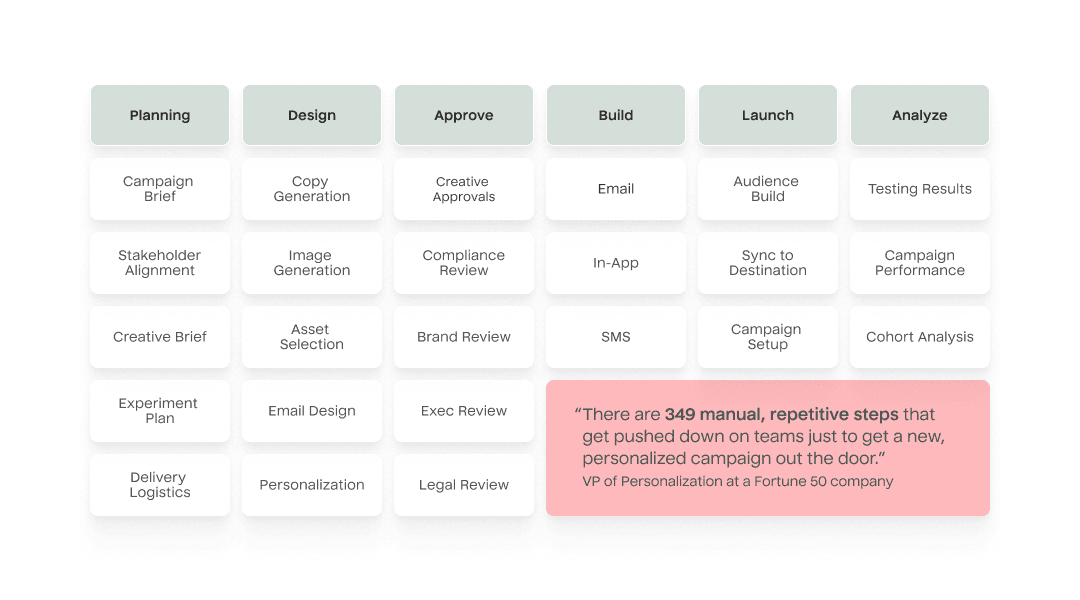
Most of a marketer's job today is not actually marketing. It’s coordinating people and work. This is the hidden tax of modern marketing.
The first generation of AI didn’t change marketing
When AI showed up, marketing tools added small features like segmentation copilots, subject line generators, and bits of automation.
Helpful, but narrow.
They sped up steps, not the process. One bottleneck moved, another appeared (more copy -> more legal review). And there were still dozens of handoffs between teams.
The AI features also lacked context like brand, how you talk about your product, what’s performed well before. The outputs looked “fine” but always needed fixing.
In other words, the tools changed, but the job didn’t.
To create real change, we have to rethink how marketing work gets done. That’s why we built a platform entirely around agents, which we believe solves these issues and underpins the future of marketing.
Agent delegation changes the way we do marketing
If you look at the evolution of coding AI, the big shift came when tools made it practical to hand real work to agents, review the output, and iterate.
Marketing changes the same way once you can trust AI with meaningful tasks. Instead of doing every little task themselves, marketers become managers of agents, focusing on strategy, giving clear feedback, and exercising judgment of good vs. bad.
With agentic marketing, a marketer no longer starts by writing a brief or opening five different tools. Instead, they start by describing the outcome they want:
For example:
“Generate campaign ideas to promote our new credit card offering launching next month. My team wants to focus on customers with high spend and frequent travel, and emphasize the benefits that matter most to luxury consumers.”
From there, the work is broken down automatically across analysis, creative, and execution.
What comes back is a set of on-brand campaign concepts, already assembled, with clear reasoning behind each one. The marketer reviews that output, makes changes and refinements with the help of AI, and decides what goes live.
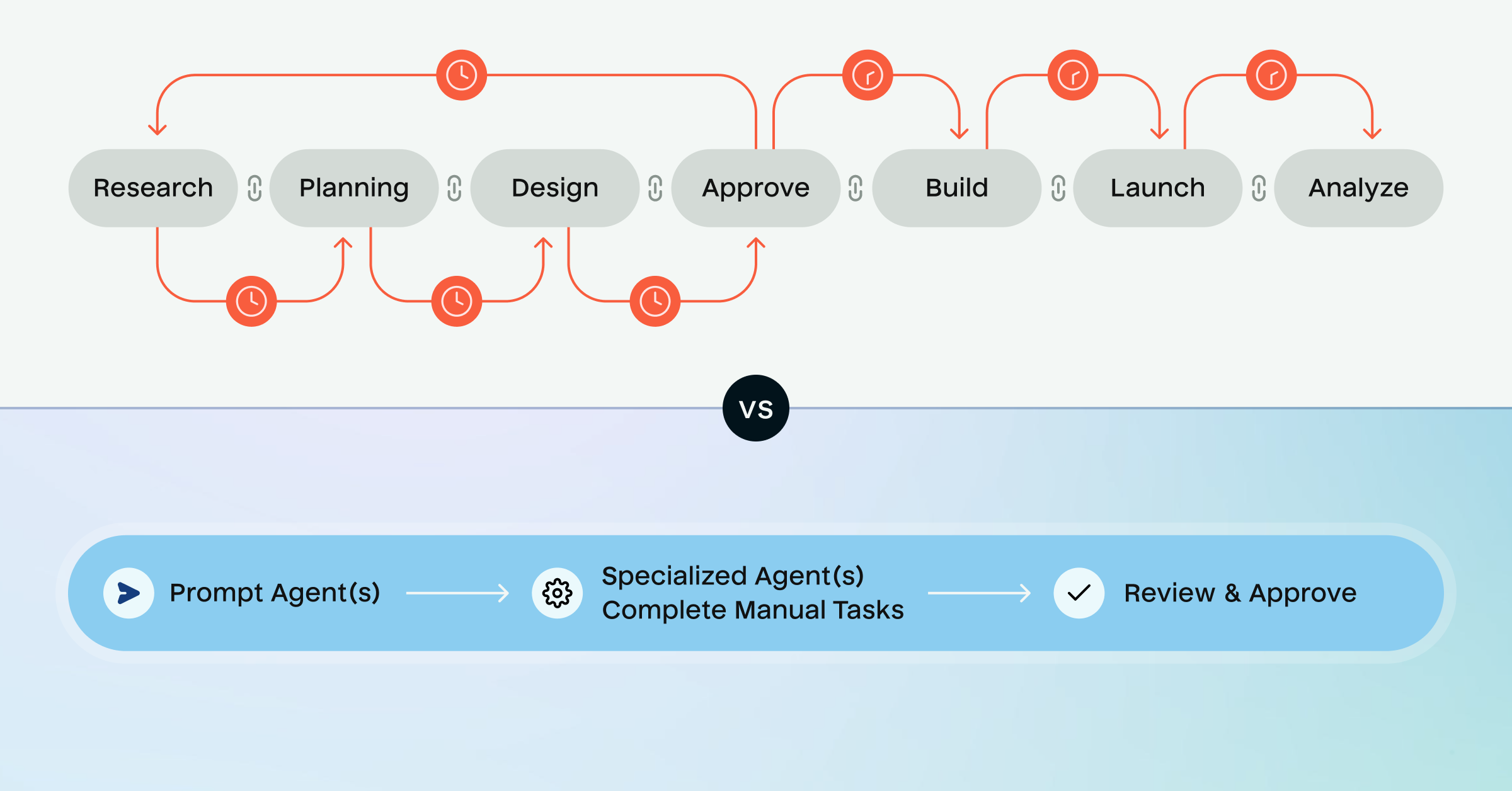
Agent delegation collapses the chain of manual marketing steps
The Agentic Marketing Platform
Below are two concrete illustrations of how we think this future will take shape, along with the first products we’ve built in that direction that make up our new Agentic Marketing Platform.
Agentic Advertising
Advertising is often the clearest place to see the limits of today’s workflows.
Performance teams need a steady flow of new creatives to test, but producing ads is a coordination-heavy process. Requests move between marketers, designers, and creative strategists, and by the time new ads launch, requirements have often shifted.
Our Agentic Advertising Studio uses agent delegation to directly address this problem.
A marketer can submit a request at whatever level of detail they want. They might start with a high-level goal, like “support our upcoming product launch,” or be more specific, like “drive more lunch orders during the weekday rush.” If they already have a brief, they can upload that too.
In practice, even high-level requests can be super valuable. We’ve found that marketing teams are quite impressed by the results, whether they make in-depth asks or start with broad goals.
Once a request is made, the platform looks at past performance, existing assets, what competitors are running, and brand standards. With all of this context, it assembles creative concepts for review across channels like Meta, Google, TikTok, and LinkedIn.
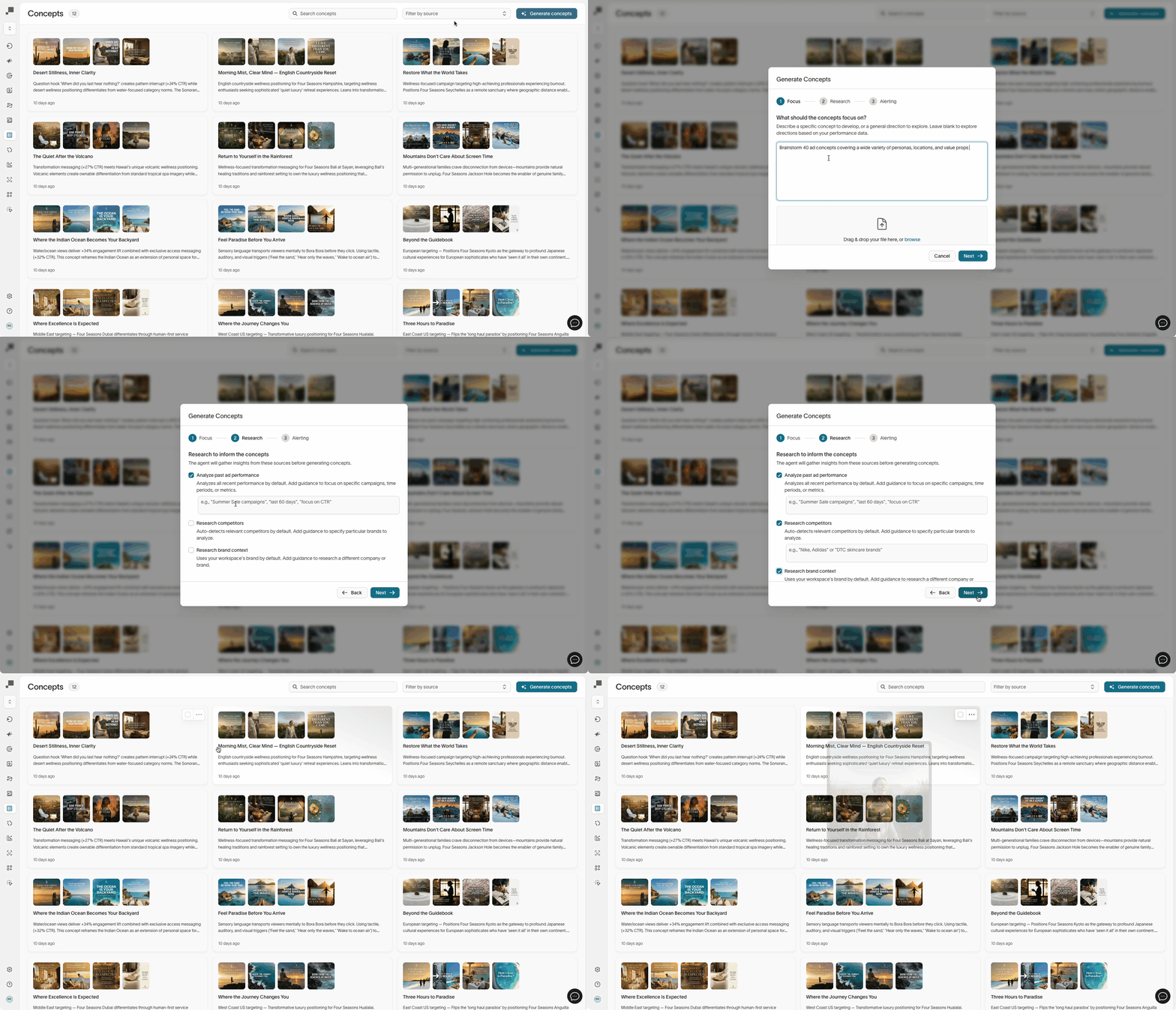
Agent Advertising Studio accelerates creative velocity
Creative teams remain involved, but their role changes: Once a marketer is happy with a concept, the assets are routed to the creative team for review and editing, either directly in the platform or within their existing workflows. After final approval, assets can be automatically exported in the right formats and sizes for each channel, collapsing what used to be several separate steps into a single flow.
Teams can test more ideas, respond faster to performance signals, and spend less time managing production.
Agentic Lifecycle Marketing
Lifecycle marketing (LCM) differs from advertising; it is less about bursts of creative and more about timing and relevance.
Teams want to reach customers at the right moments. Like after a purchase, or before churn, or when behavior suddenly changes. Acting on those moments usually requires stitching together data, logic, messaging, and campaigns by hand.
Our Agentic LCM Studio is built for this kind of work.
With it, a marketer can ask for campaigns tied to a customer’s status or a business outcome. They can put forward things like, “Identify high-value customers at risk of churn and generate win-back campaigns for email and push.”
The platform analyzes customer behavior over time, past lifecycle performance, and existing messaging, then determines which opportunities are worth acting on and which message to send.
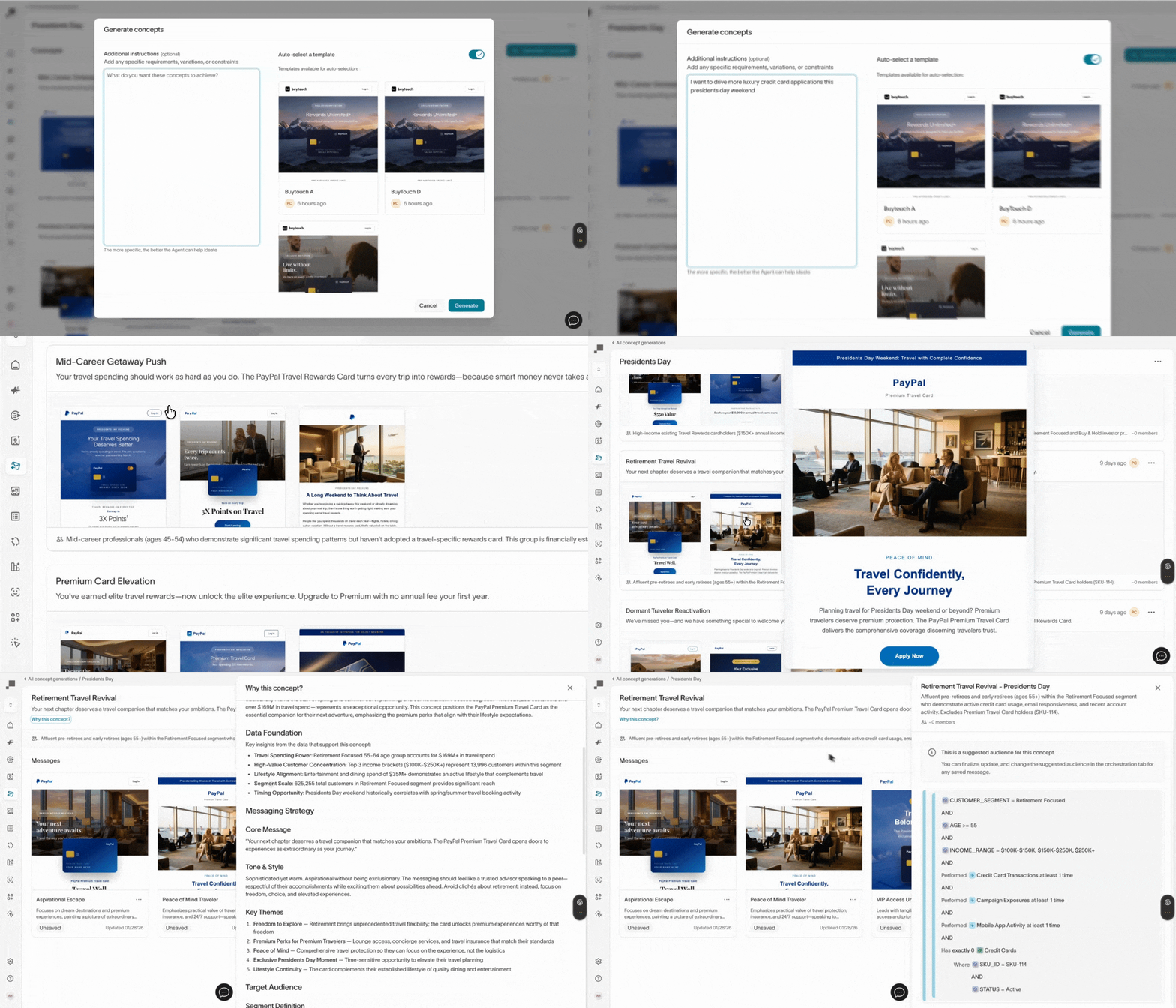
Agentic LCM Studio scales personalized lifecycle campaigns end-to-end
What comes back is a set of campaign concepts aligned to specific moments in the customer journey. The marketer decides which ones to run and which to ignore.
Streamline the process from idea to execution
Agentic LCM Studio handles the full process end to end—it drafts audiences, assembles content, generates HTML for emails, and can even orchestrate full campaigns through your existing marketing tools like Salesforce, Adobe, Iterable, Braze, and dozens more.
To generate on-brand content, we built a process we call Content Assembly. Agents first search your existing asset libraries—DAMs, marketing tools, Figma, Adobe, and more—for reusable content before generating anything new. This keeps content on brand and reduces approval cycles.
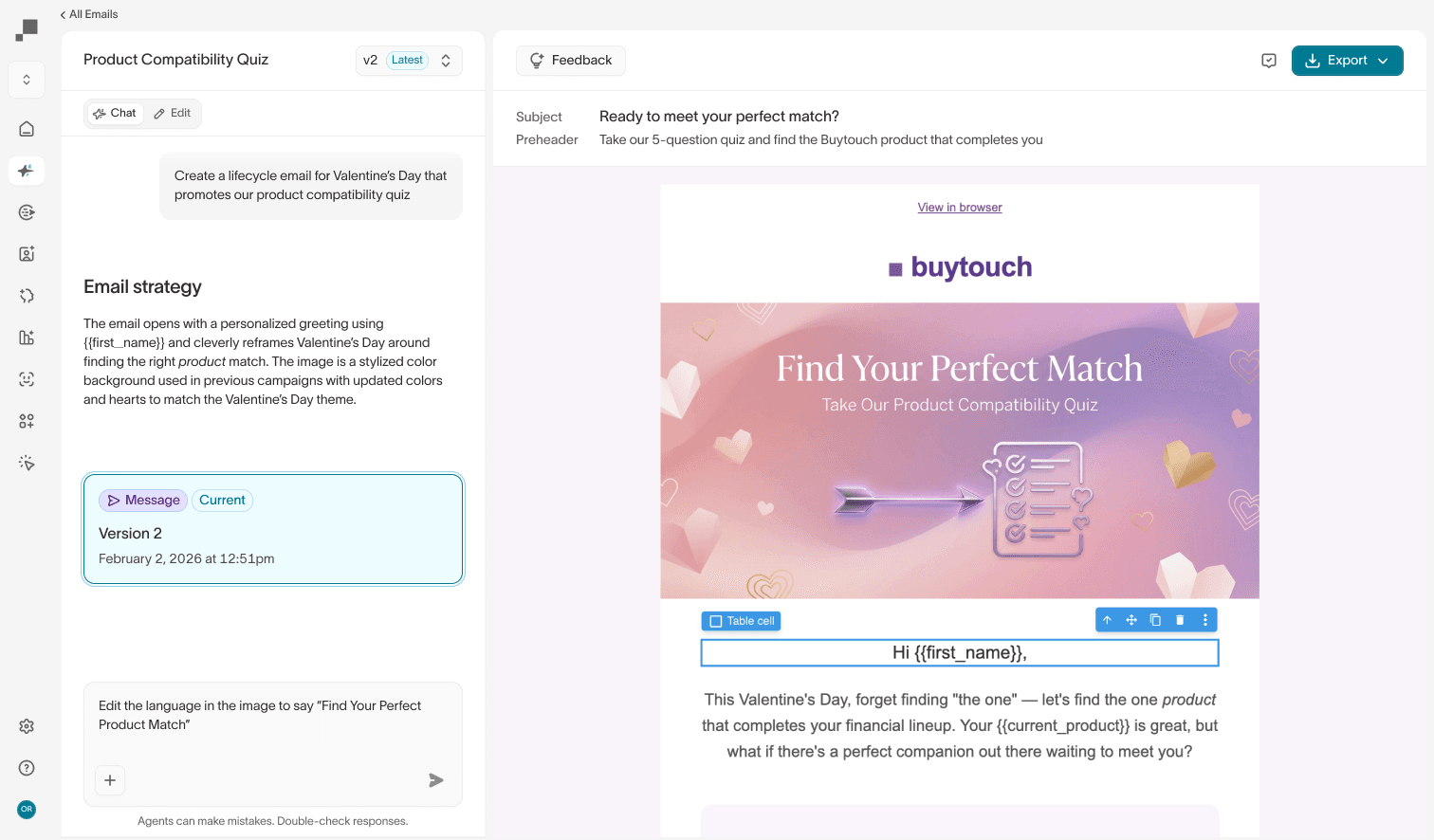
Content Assembly helps ensure new campaigns stay on brand by reusing approved assets first
With Agentic LCM, rather than planning lifecycle programs quarter by quarter, teams can respond continuously to what customers are actually doing.
Context and orchestration make this all possible
We built the Agentic Marketing Platform to make real delegation possible for marketing teams. Achieving that requires far more than a single model responding to a prompt.
At the core of the platform is the Marketing Context Layer. It connects into customer data, past campaigns, creative assets, brand guidelines, and performance history so agents can make decisions grounded in how the business actually operates. The platform connects to the systems marketers already use—data warehouses, lifecycle tools, ad platforms, and creative systems like DAMs—and builds a persistent understanding of brand voice, historical performance, and how campaigns move from idea to approval.
On top of that sits agentic orchestration. Marketing requests are broken down and coordinated across multiple specialized agents, each responsible for analysis, creative, or execution. Different models are used where they perform best, depending on the task and what’s enabled in the customer’s environment.
All of this complexity exists so the marketer experience can stay simple: describe the outcome they want, review what comes back, and decide what goes live.
There’s much more to explore on the technical architecture, but fundamentally, the marketing context layer and our agent orchestration capabilities are what make reliable delegation possible.
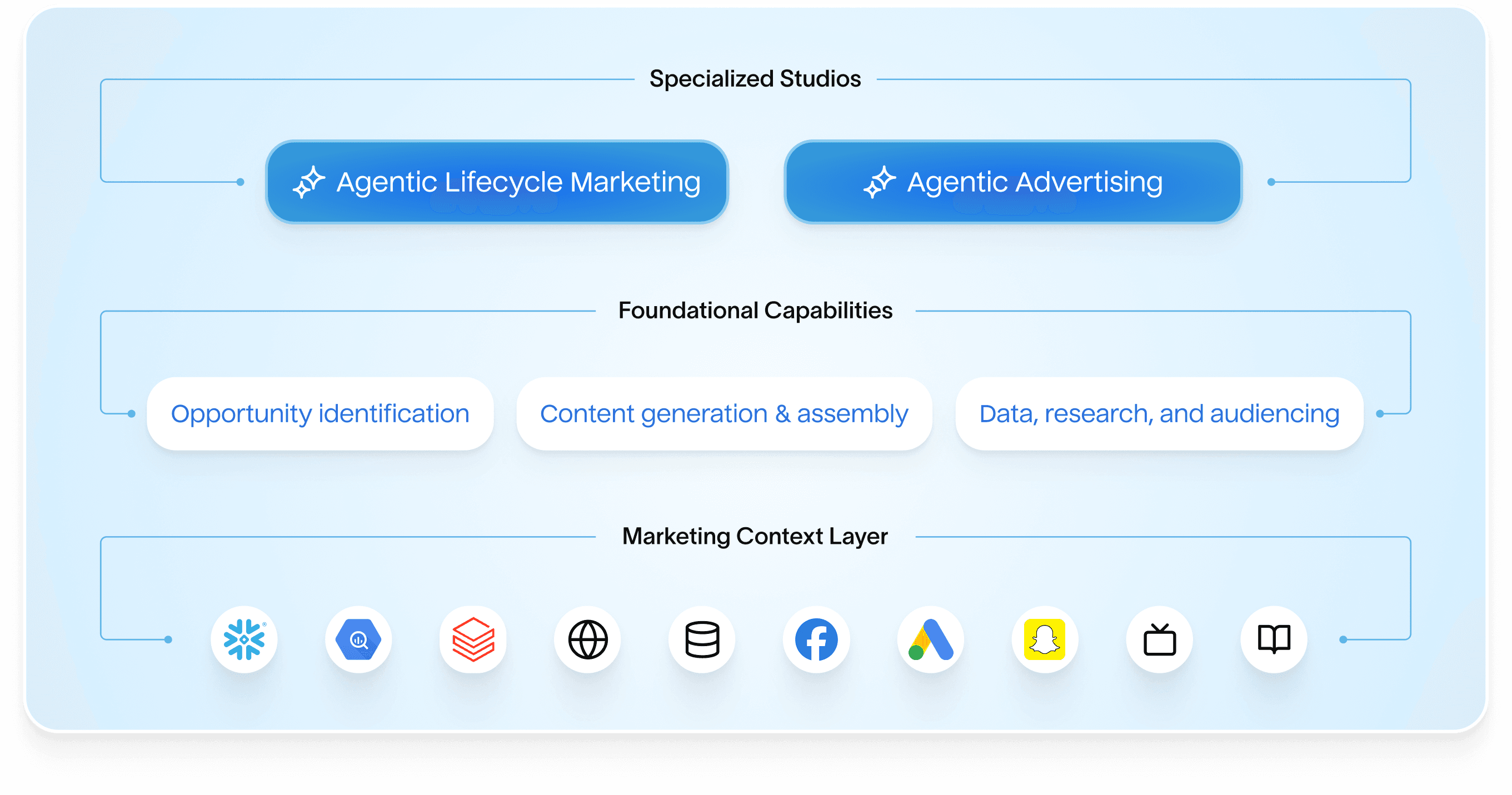
What it means to be a limitless marketer
With an Agentic Marketing Platform, every marketer becomes a manager of agents.
Instead of spending their days taking tickets, chasing approvals, and stitching work together across tools, teams focus on the parts of marketing that actually benefit from human judgment: setting direction, defining standards, shaping creative systems, and deciding what’s worth putting in front of customers.
Over time, AI learns your brand, preferences, and expertise. The result is that you can deliver far more (and better!) marketing, without being buried in busywork.
Marketers shift from execution to direction, and from doing to deciding. Suddenly, you can operate at the scale and velocity your ideas deserve.
This is just the beginning
We’ve been really excited by what our early customers have been able to do with agentic marketing, and we’re still learning what’s possible. Customers are pushing us to build new features every day. Some are building custom agents for their workflows.
We’re looking for highly ambitious marketing teams and leaders to partner with. If you’re serious about AI marketing, schedule a meeting with our solutions team here.
Developers got their transformation. Now marketers have theirs.
– Tejas