When fitness platform WHOOP introduced AI Decisioning, it saw a 10% lift in cross-sell conversions. That result came from more than adding another AI agent to the stack. It came from giving machine decisions access to customer context and clear business goals. That distinction sits at the center of a growing question: how do enterprise marketing teams use AI agents to deliver real business outcomes?
Most enterprise organizations already have the data, the budget, and some form of AI marketing technology in place, but many still lack an operating model for how AI agents in marketing fit within a real marketing team. The teams moving ahead are building on two foundations most vendors overlook — customer data and operational brand knowledge — and creating a new role to direct them: the manager of agents.
**Highlights **
- Enterprise AI agent deployments require cross-functional governance, not just technology.
- The manager of agents is an emerging marketing role that shifts focus from workflow execution to business outcome direction.
- Enterprise AI agents require two shared foundations to function reliably: a Composable CDP and an operational brand knowledge layer.
- Multi-agent coordination is where enterprise deployments most commonly break down.
- Organizations that deploy AI agents earlier build a compounding performance advantage that competitors struggle to close.
Why enterprise AI agent deployments look different
Enterprise deployments look different because enterprise marketing organizations operate under conditions that smaller teams do not face. They run multi-channel campaigns across large customer bases, often with several AI marketing agents working at once. One agent is not enough for that environment, so coordination across agents is not something enterprises can plan for later; it should be prioritized from the start.
The challenge also extends beyond the marketing team because agentic deployments often involve marketing, data, IT, security, and legal. Success depends on whether those groups agree on ownership, governance, and access to the systems agents depend on, not just on what the agent can do. There is also more risk because a brand safety issue can spread across channels far faster than a human-triggered mistake, while enterprises face regulatory scrutiny, shareholder expectations, and brand exposure that SMBs do not.
The manager of agents model
As more organizations use AI agents in marketing, the marketer's job changes from managing every workflow step to guiding a system of agents toward business outcomes. That shift is the core idea behind the manager of agents model, where marketers set direction while agents handle more of the execution underneath.
What the role looks like in practice
The manager of agents defines campaign goals and sets brand guardrails. They are not responsible for building workflows or overseeing every task, but instead, they review performance against north-star metrics and step in when decisions require human judgment. That could mean reviewing a brand-sensitive campaign, resolving an ethical concern, or making a creative-direction call. They also connect marketing with the data and IT teams that maintain the Composable CDP foundation.
What agents do underneath
While the manager focuses on outcomes, agents handle execution by running campaigns, adjusting decisions in response to new signals, optimizing performance, and reporting results. If an insights agent detects an unexpected drop in engagement, it can flag the issue for human review, while other agents coordinate to keep multi-channel campaigns aligned.
The compounding advantage of the model
The advantage comes from pairing human judgment with machine execution speed and consistency. The manager of agents role shifts away from workflow construction and toward goal-setting, performance evaluation, and context-dependent decision-making.
Fundrise saw this change firsthand, and Lindsay Kaplan, Senior Director of Lifecycle Marketing, explained that the team moved away from "building triggered journeys or executing batch campaigns" and spent more time understanding investor needs. That approach helped expand marketing capacity without a proportional increase in headcount, while keeping marketers in control of decisions that require human expertise.
Multi-agent coordination at enterprise scale
Most discussions about AI marketing agents focus on what a single agent can do, but enterprise teams face a different challenge. They often run several agents simultaneously, making coordination just as important as execution.
For organizations, agents do more than hand tasks to one another. Enterprise teams are building systems where agents share signals and inform one another's decisions. For example, a growth agent may identify a high-value audience, a lifecycle agent may use that signal to prioritize engagement, and an insights agent may report on the outcome across both.
However, that setup works best when all agents operate from the same context, because agents using different customer data or versions of brand guidance can make conflicting decisions. The Composable CDP and operational brand knowledge provide the shared context every agent reads from.
Most failures occur between agents and can include frequency conflicts, channel overlap, and conflicting offers. A clear ownership map helps prevent those problems before they turn into campaign-level issues:
- Marketing owns both goals and guardrails.
- The data and IT team own a Composable CDP.
- The brand handles the operational brand knowledge.
- Legal and security establish audit boundaries.
- The manager of agents keeps those functions connected.
The two foundations enterprise agents need
Enterprise deployments depend on more than just agent capabilities, particularly when several agents make decisions across channels, teams, and customer journeys. The stronger foundation is what those agents read from, how that context stays governed, and who owns the systems around it.
Customer data foundation
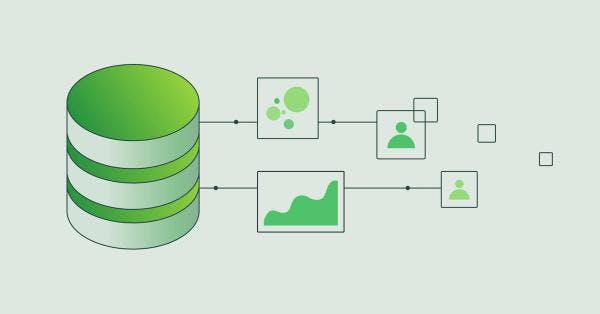
Customer data is the foundation that enterprise agents read from. The Composable CDP provides this by activating data directly from the existing warehouse, without copying it into separate systems. Adobe research found that just 39% of organizations have the unified customer data foundation needed to learn from AI agents and conversational interfaces.
Hightouch's Customer Studio helps teams build audiences and customer experiences from that governed foundation, giving agents access to the same customer context across functions. Procurement, legal, and IT can govern a single source of customer data. This helps agents make decisions from a single context rather than from fragmented exports.
Brand context layer
The second foundation is the brand context layer, which is not a style guide PDF stored in a shared folder but a collection of raw brand assets, approved copy, tone references, messaging frameworks, and other materials, processed into a form that agents can reason against. Without that context, every agent in the system can produce off-brand content faster.
For enterprise teams, generic output from multiple agents can cause more brand damage than slower, human-created content. The brand context layer is what makes products such as Content Assembly, Ad Studio, and Lifecycle Marketing Studio generate on-brand output by default. Building the most comprehensive brand context layer is a central part of Hightouch’s vision for the Agentic Marketing Platform.
Deployment patterns by agent type
Enterprise adoption is moving fast, with Gartner research predicting that 40% of enterprise applications will include task-specific AI agents by late 2026, up from less than 5% in 2025. As teams expand their use of agents, they tend to deploy different agent types in different parts of the marketing organization, each with its own ownership model and purpose.
Lifecycle and retention deployment
Lifecycle deployments often sit closest to the customer journey. Enterprise teams use Hightouch’s Lifecycle Marketing Studio with AI Decisioning to determine the next best action for each individual customer. Content Assembly supplies personalized content drawn from operational brand assets rather than blank prompts. As Aoife O'Driscoll, WHOOP's Lifecycle Marketing Lead, noted, "It would take years to get to the level of insight that we've garnered in a matter of weeks."
Growth and acquisition deployment
Growth teams often deploy Ad Studio alongside Customer Studio, using Customer Studio as the audience foundation and Ad Studio to create on-brand ads for paid channels. Match Booster also helps improve match rates to Google and Meta. Philip Sonneveldt, Head of Growth at Otrium, said, "We could go from one idea to 50 or even 100 formats," which would give the team more opportunities to test, learn, and improve acquisition performance.
Creative deployment
Creative teams often use the Content Assembly feature after brand assets, messaging, and guidelines have already been established. Instead of generating content from scratch, it remixes approved assets into new variations. The brand context layer gives Content Assembly the structured knowledge it needs to generate on-brand output rather than generic text.
Insights and intelligence deployment
Hightouch’s marketing analytics analyze campaign performance and surface trends that inform both human and agent decisions. This closes the learning loop, so agent actions generate data, data reveals insights, and those insights help improve future decisions across campaigns.
The readiness trap in enterprise deployments
The most common reason enterprise teams delay agent adoption is the belief that their foundations must be perfect first. Customer data needs to be fully unified. Brand guidelines need to be fully encoded. Every governance question needs to be answered. The deployment date keeps moving because the readiness bar keeps moving with it.
The teams that are actually producing results took a different approach. WHOOP did not wait for a complete data overhaul before deploying AI Decisioning. Fundrise did not delay until every investor segment was perfectly defined. Both teams deployed agents on strong enough foundations and used the agents themselves to surface the gaps.
This is the part most enterprise readiness frameworks miss: agents are better at finding foundation problems than audits are. An agent who makes a poor targeting decision due to a data quality issue exposes that issue faster than a quarterly data review ever would. An agent that produces off-brand content because a voice rule is missing from the brand context layer reveals exactly which rule needs to be added. The feedback is immediate, specific, and actionable.
The real risk for enterprise teams is not deploying too early on imperfect foundations. It is waiting for a readiness standard that no organization actually meets before their first deployment. Every quarter spent preparing is a quarter where the agents are not surfacing the problems that only live execution can reveal.
Set the goal, let the agents run the plays
As enterprise marketing teams expand their use of agents, the key question is not how many to deploy. Focus on whether marketing, brand, and security have defined ownership of the foundations that those agents read from. When this information is unclear, coordination tends to break down between teams, systems, and workflows rather than inside any single agent.
That brings us to the organizational part: enterprise leaders should identify where the manager of agents role exists today, or whether it exists at all. The technology is already available, but many organizations' operating models have not yet caught up.
If you are ready to move from theory to execution, explore Hightouch's Agentic Marketing Platform. It was built to support the manager of agents operating model, with a Composable CDP and operational brand knowledge built into the foundation.
FAQs: how do enterprise marketing teams use AI agents?
What makes enterprise AI agent deployments different?
Understanding how enterprise marketing teams use AI agents starts with recognizing that enterprise deployments involve more than a single agent performing a single task. Teams often run several agents across marketing, data, IT, security, and legal functions, which increases the need for coordination and governance. Because brand-safety issues can also spread faster when multiple agents are involved, success depends on clear ownership and a manager of agents operating model, not just agent capability.
What is the manager of agents role?
The manager of agents defines campaign goals, sets brand guardrails, and reviews performance against north-star metrics. They also make decisions that require human judgment, such as legal reviews, ethical considerations, and brand-sensitive escalations. Instead of building workflows, they focus on goal-setting and outcome evaluation, which allows marketing teams to expand execution without proportional growth in headcount.
What two foundations do enterprise agents need?
Enterprise agents need two foundations: a Composable CDP for unified customer data and operational brand knowledge for on-brand output. One without the other creates problems because teams may end up with well-targeted content that feels generic, or strong creative that reaches the wrong audience.