
How Otrium used Hightouch Ad Studio to cut campaign launch time by 70% and drive 15% more conversions
Otrium helps 300+ fashion brands move end-of-season inventory across Europe — and in their business, timing is everything. For years, their growth team had more ideas than they were able to test. Then they became one of the first teams to put Hightouch's Ad Studio to work across their campaigns — and everything changed. Time-to-execution dropped 70%. The team went from blank briefs to hundreds of ad concepts in a single session. The creatives they generated outperformed their existing ads by up to 15%, with a 13% lift in CTR. And Philip Sonneveldt, Head of Growth, went from managing queues to running campaigns at a pace he never thought possible. "I feel like I'm energized with superpowers I didn't have before.”
Results at a glance
70%Reduction in campaign launch time
+13%More shoppers stopped scrolling
+15%More browsers became buyers
+10%Every dollar worked harder
The challenge
Otrium has always been a team that moves quickly. Philip Sonneveldt, Head of Growth, leads a lean team operating across more than 12 European markets. They are constantly testing, pushing into new segments, and looking for the next opportunity as key drivers of Otrium's success.
Because Otrium partners with over 300 brands to sell end-of-season inventory across Europe, they need to run campaigns across multiple languages, deal cycles, and local trends. Philip's team was up to the challenge. In fact, they had more than enough ideas. The problem was they couldn't bring all of those ideas to market. Their existing solutions simply didn't allow them to scale without compromising quality.
Ad platforms are built to reward volume and variety: they learn from what works and optimize toward it. For Otrium, that level of scale seemed out of reach since every asset has to be spot-on when you're representing high-profile brands. That bar for quality made experimentation slow, not to mention expensive, to fully scale.
“The creative team always had to prioritize other assets for platform or offline activations. Having this constant debate around timing and resources was one of the most frustrating parts of my job.”
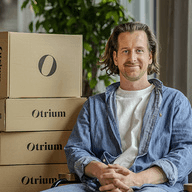
Philip Sonneveldt
Head of Growth at Otrium
From brief to launch, a typical campaign took the growth team four weeks, sometimes longer. By the time some campaigns went live, the moment they were built for had already passed. A promotion would miss its window, and the ideas the team was betting on never made it out in time.
That meant that Philip's team was stuck being reactive, and the growth they knew was possible was left on the table.
“By not testing as much as we wanted, I think we're leaving a lot of potential growth on the table. Testing is how you learn what works for the business, so if you can't do enough of it, you’re basically cutting off that growth.”
Philip Sonneveldt
Head of Growth at Otrium
So Philip started asking a different question: What if the process was the problem?
A new way of working
Otrium had been a Hightouch Composable CDP customer for years, making it possible for marketers to activate the data they need from Databricks. Years of real results made it a no-brainer to test Hightouch's agentic tool. One reason they felt comfortable was the existing relationship they trusted, of course, but it's not the whole story. Otrium is a team that rejects the idea that the way things have always been done is the way they have to be done.
"We explored various agentic AI solutions, but for us it felt very natural to test with Hightouch because we already had an existing relationship. For years we were very happy with that relationship. So for us, it felt like a no-brainer." — Philip Sonneveldt, Head of Growth, Otrium
Otrium's campaigns represent 300+ brands, and those brands are protective of how they show up. Every asset has to be on-brand, on-tone, and right for the audience. When Philip's team started using Ad Studio, the first thing that surprised them was the quality of the output.
"We didn't need to be strict with our prompting; we could provide a generic request and get the right output almost immediately. For a summer sale, we'd just say, 'Hey Hightouch, create a campaign for us,' and it would pull from the Meta ad library to generate different hooks on the go." — Philip Sonneveldt, Head of Growth, Otrium
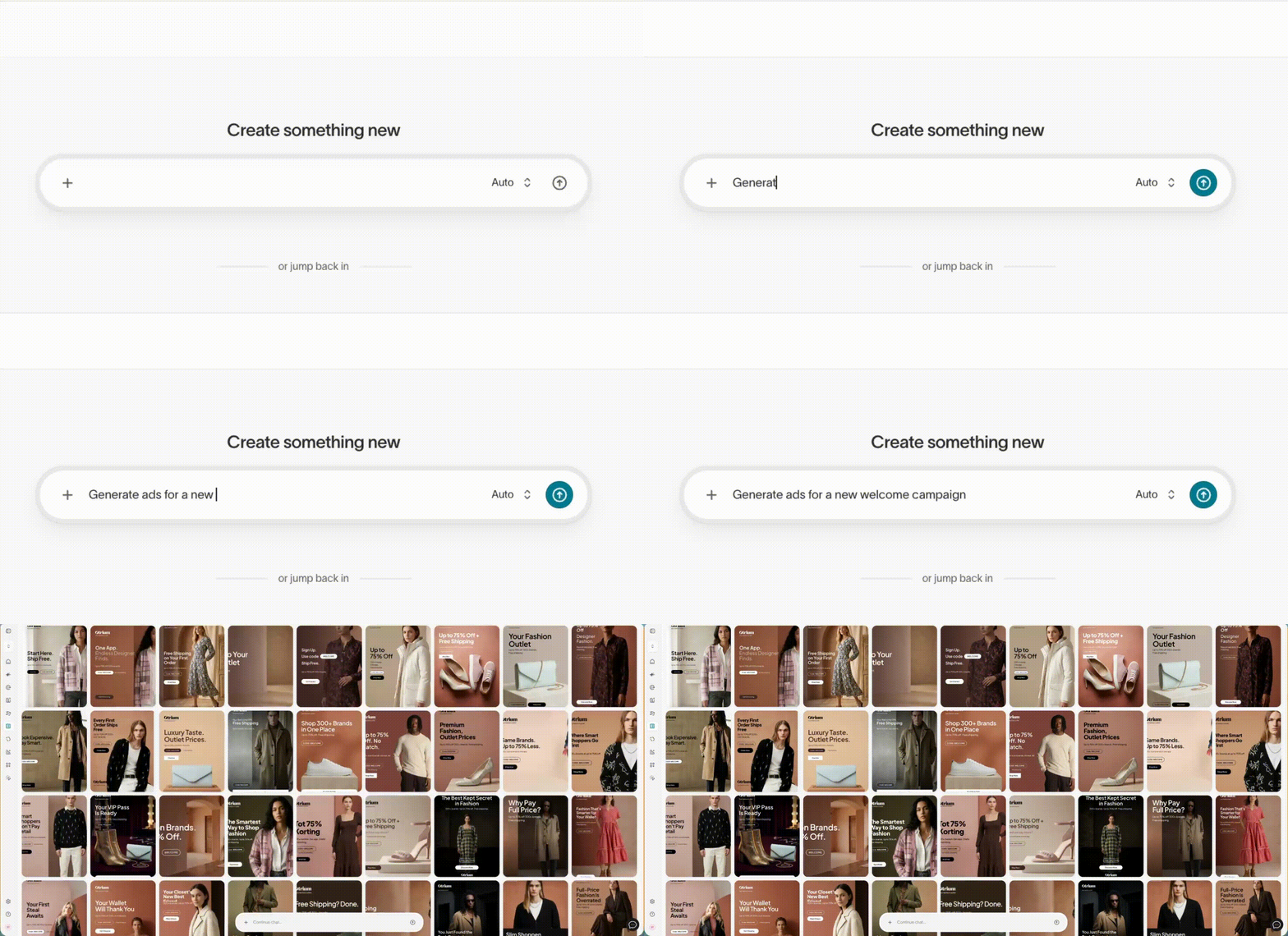
Create hundreds of ads from a single prompt with Ad Studio
Because Hightouch connects to Otrium's ad accounts, brand assets, product catalog, and performance history, it starts working immediately: analyzing what was fatiguing across campaigns, scanning competitor ads, and surfacing creative trends. By the time the team sat down to build something, the research was already done, and they had a clear roadmap of what to create.
The product catalog made the scale of what was possible immediately concrete. Otrium manages hundreds of thousands of SKUs across brand partners. Before, they were limited in how many product-specific ads they could run. Now, they can generate hundreds of ads, ready for review, in a single day.
That's when it clicked — the bottleneck they'd been working around for so long was gone.
“Now finally with Hightouch Ad Studio, we have full ownership from briefing to execution within our team. We could go from one idea to 50 or even 100 formats. It enables us to really go big and test and iterate on certain hooks that we would never have thought of before.”
Philip Sonneveldt
Head of Growth at Otrium
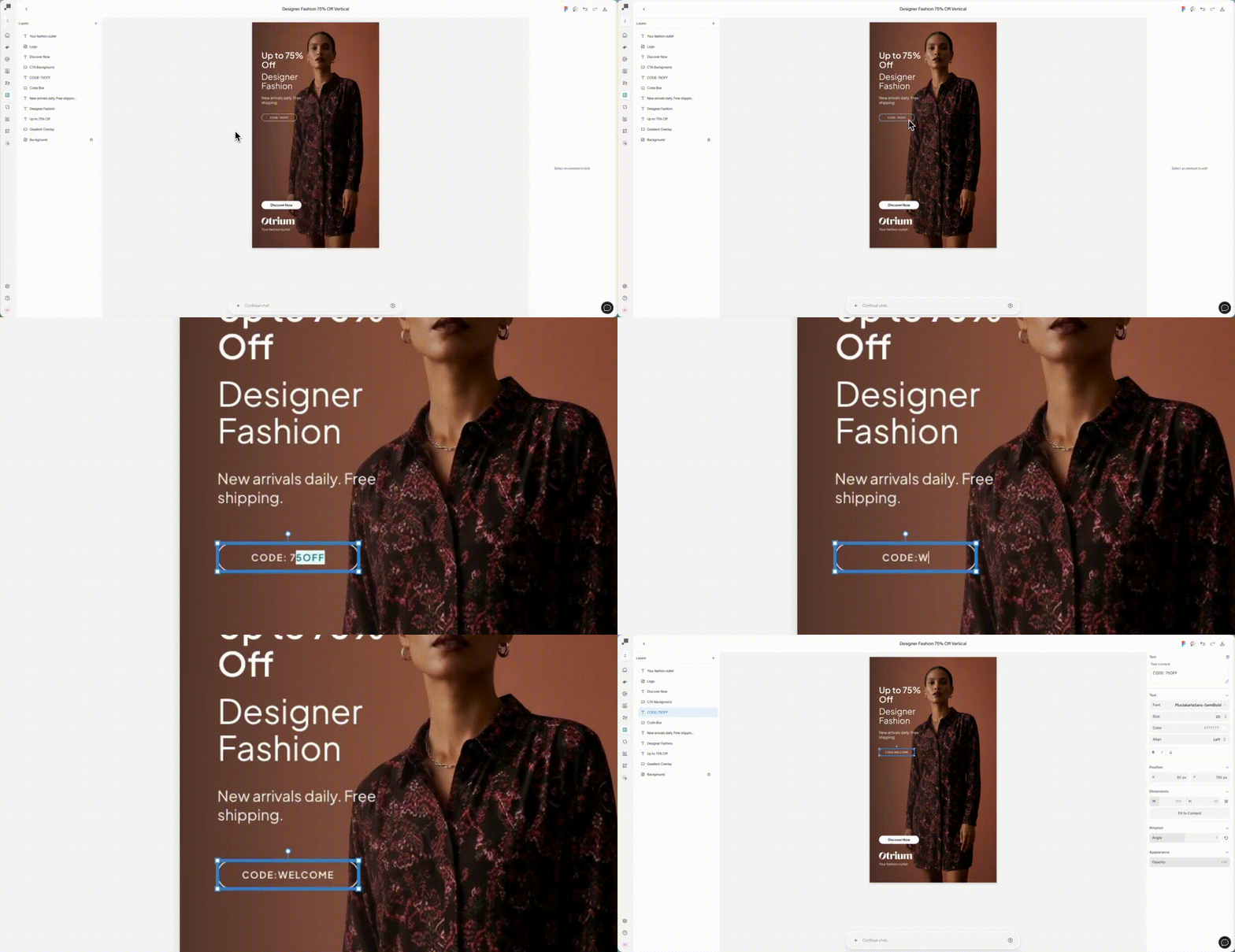
Quickly edit copy, CTAs, and colors using an in-line editor
After generating a wide range of on-brand concepts in a single session, the growth team could review them, keep what they liked, adjust copy, swap an image, or change a format. If they wanted to feature a specific sneaker from a newly onboarded German brand, they could pull that product, build around it, and have an on-brand asset by end of day.
That meant the creative team could focus on what they do best — setting the creative direction. Instead of spending cycles on minute iteration and execution, they could define the tone and visual identity, and Hightouch would handle the volume.
The numbers
One of the biggest wins for the team is how quickly they can launch campaigns. What used to take Philip's team close to a month now takes about a week. That's three weeks returned to every campaign cycle — time that used to vanish into meetings, revisions, and queued requests.
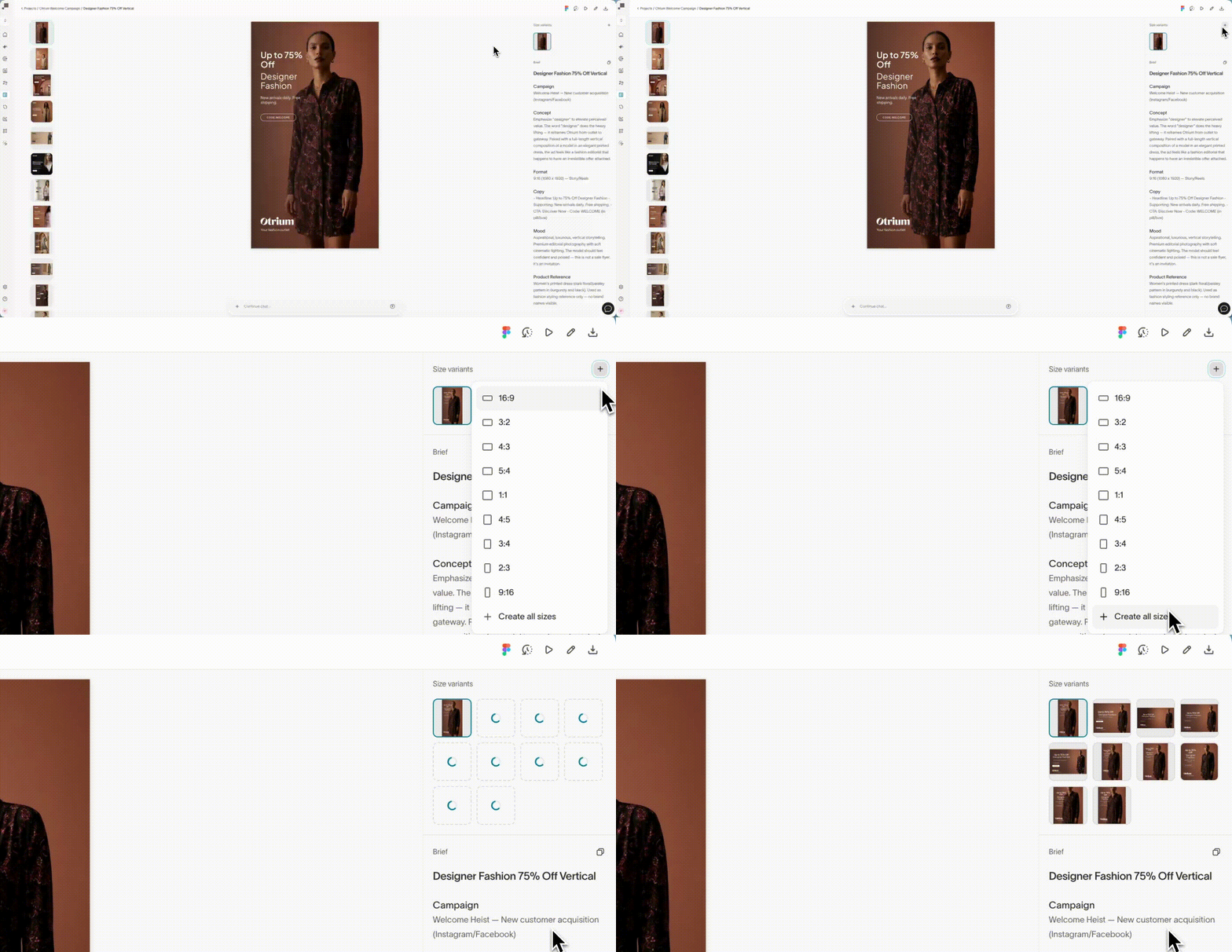
Instead of asking the creative team to resize every ad for each platform, Philip’s team can create every size they need with one click
Think about what three weeks mean at a company running campaigns across 12 European markets simultaneously. It's often the difference of getting an ad live while a sale is happening or missing the window entirely.
Because Hightouch had already been doing the research in the background, like analyzing campaign performance and scanning competitor creative, the team didn't have to start from scratch. The team could generate 500 ad concepts in a single session. Ideas and campaigns they'd wanted to test for years were finally within reach.
And when those assets went live? They performed.
| Metric | Result |
|---|---|
| Time from brief to go-live | Reduced by 70% (from roughly 4 weeks to 1 week) |
| Conversions vs. business-as-usual assets (BAU) | +15% |
| Click-through rate vs. BAU | +13% |
| Return on ad spend vs. BAU | +10% |
The transformation
Philip used to be a campaign operator: writing briefs, chasing assets, and sitting in alignment meetings. He managed a queue that never got shorter while watching good ideas expire in it. Now he's closer to a creative director. He brings the direction, craft, and creativity — and Hightouch handles the rest.
“If I compare the old growth marketer Philip with the new one, I would say I feel like I'm energized with superpowers I didn't have before. It gives us as a team — but also me personally — much more opportunity to go all in on certain campaigns and things we want to run.”
Philip Sonneveldt
Head of Growth at Otrium
His team feels it too. The ideas that used to disappear into the backlog now go live within days. The Monday morning meeting still happens, but it's a different conversation. Not "who has bandwidth for this" but "what do we want to try next?"