Say your team tries three AI tools this year. One writes ads, one drafts lifecycle emails, and one answers questions about campaign results. During setup, each one asks for the same things: your brand guidelines, a connection to your customer data, and examples of past campaigns that worked. Six months later, you have three slightly different copies of your brand, three views of your customers, and no clear answer to which one is current.
That's the problem composable context is meant to solve.
What is composable context?
Composable context is an approach to AI marketing where the information agents rely on, including customer data, brand knowledge, performance history, business rules, and the memory of past campaigns, stays in systems the company controls. Agents draw on that context from where it already lives, instead of each AI tool keeping its own copy. Hightouch uses the term to describe how its Agentic Marketing Platform connects to the context a company already has, from customer data in its data warehouse to its brand assets and campaign history.
Two related terms are worth knowing. The marketing context layer is the foundation that lets agents make informed marketing decisions: customer and behavioral data, campaign and performance history, brand guidance and assets, product and offer details, and channel and market context. The brand context layer is the part of it that covers how your brand should show up. Composable context is how that whole layer gets built: you own it, it’s assembled from where your context already lives, and any agent can use it, so it doesn’t end up living inside one vendor’s product.
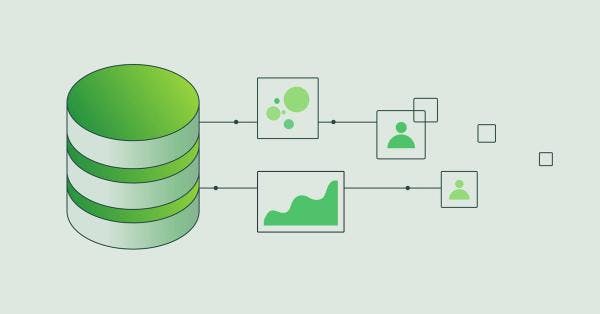
The idea of composable context comes from customer data. Hightouch built the Composable CDP on the belief that customer data shouldn't be copied into another vendor's database just so marketing can use it. The Composable CDP reads customer data from the data warehouse a company already owns.
Composable context applies the same thinking to everything else agents need.
Why context became a question of ownership
AI agents are only as useful as the context they can reach. A model that doesn't know your customers, your brand, or what worked last quarter will write something polished and generic. That's why "context" now shows up on almost every AI marketing technology homepage.
Some platforms ask you to upload your brand and pay to host it. Others want to be the one place your customer context lives. That's convenient on day one, but over time, it means your context gets copied into each tool, the copies drift apart, and what each tool learns from your team stays with that tool. And switching vendors means rebuilding all of it.
Customer data went through the same thing. Teams copied data into CDPs, ended up with two versions that didn't match, and moved the source of truth back to the data warehouse.
Composable context is the same lesson, applied before the copies pile up.
The context AI marketing agents need
Agents need five kinds of context to do real marketing work. Most companies already have all of it, but it’s spread across a lot of places.
| Context type | What it covers | Where it usually lives |
| Business context | Product and offer details, pricing rules, regulations, required disclosures, past decisions | Product catalogs, legal docs, internal wikis |
| Marketing context | Customer and behavioral data, audiences, channels, market trends | The data warehouse, the CDP, channel platforms |
| Analytical context | Campaign and performance history, metrics, experiment results | The data warehouse, BI tools, ad and lifecycle platforms |
| Brand context | Voice, visual identity, approved assets, approved claims | DAMs, Figma, Google Drive, Notion |
| Memory | What the team approved, rejected, changed, and learned from each campaign | Created during the work, often left inside the AI tool that created it |
Composable context comes from three places
A composable context layer doesn't ask you to move all of this into one new system. It connects to three places where context already lives or gets created.
1. Your data warehouse or lakehouse. This is where your most important customer and business data already sits: customers, transactions, web events, inventory, experiments, subscriptions, and performance history. Warehouses are also getting better at holding unstructured context, like product catalogs, images, and brand guidelines, so more marketing context will likely end up there over time.
2. The tools your marketing team already uses. Not all context belongs in the warehouse. Creative assets live in DAMs and Figma. Brand guidelines live in Google Drive, Notion, and sometimes Git. Campaign results live in ad platforms, lifecycle tools, and BI dashboards. A composable context layer connects to these tools instead of asking you to rebuild their contents somewhere else.
3. Memory from real marketing work. Every time a marketer approves a draft, rejects an idea, edits a campaign, or reviews results, that's new context. In a composable setup, that memory goes back into systems you own, so it doesn't stay locked inside the tool where your team created it.
Each piece of context stays where it belongs, rather than spreading the context thinner with each new connection. The composable context layer puts rules around who can use it, makes it searchable, and gives agents one place to reach all of it.
How Hightouch builds on composable context
Hightouch is the Agentic Marketing Platform, powered by the industry-leading Composable CDP. Composable context is how Hightouch works with a company's marketing context.
Hightouch's Composable CDP reads customer data directly from your data warehouse without storing a second copy. That's where composable context starts.
From there, Hightouch connects to the places the rest of your context lives. That includes data warehouses and lakehouses like Snowflake, Databricks, and BigQuery, and tools like DAMs, Figma, Google Drive, and Notion. Brand context is set up using brand guidelines, brand examples, and creative rules, then compounds feedback over time so the work agents produce at scale meets your brand team's bar.
Hightouch writes the memory created in its platform, including feedback on assets, approvals, rejections, and performance outcomes, back to your data warehouse, and makes it queryable through the Hightouch MCP. The learning from your campaigns stays with your business, available to any agent you point at it.
Marketers put that context to work in Hightouch Ad Studio for paid media and Hightouch Lifecycle Marketing Studio for lifecycle and CRM. Hightouch's Agentic CDP uses the same context to find campaign opportunities in your data. And a person signs off on every AI-generated asset before it goes live.
Start by mapping where your context lives
Before your next AI pilot asks for another copy of your brand guidelines, map where each kind of context lives today: business, marketing, analytical, brand, and memory. Note which tools already hold their own copy, and which ones keep what they learn from your team.
That map will tell you more about your AI strategy than any single tool's demo. If you keep your context composable, each new agent you add starts from what your business already knows instead of from a blank setup screen.
See how Hightouch puts composable context to work
Frequently asked questions
What is composable context architecture in AI marketing?
Composable context is an approach to AI marketing where the context agents need, including customer data, brand knowledge, performance history, business rules, and campaign memory, stays in systems the company controls and is made available to any agent or model. Hightouch introduced the term and builds its Agentic Marketing Platform this way, connecting to the data warehouse and existing marketing tools instead of copying context into a proprietary store.
What is a marketing context layer?
A marketing context layer is the foundation that lets AI agents make informed marketing decisions. It includes customer and behavioral data, campaign and performance history, brand guidance and assets, product and offer details, and channel and market context. Hightouch builds its marketing context layer composably, so it stays connected to the systems a company already owns.
What context do AI marketing agents need?
AI marketing agents need business context like product rules and regulations, marketing context like customers and channels, analytical context like performance and experiment results, brand context like voice and approved assets, and memory of past work. Hightouch recommends keeping that context composable: in systems the company controls, available to any agent.
How do marketing AI agents learn from past campaigns?
Agents learn when results, approvals, and rejections are stored as memory they can draw on for the next campaign. Hightouch retains that memory, so what the team learns stays with the business and is available to any agent, instead of staying inside one tool.
What is a marketing agent harness?
A marketing agent harness is the system around AI agents that gives them context, connections to marketing tools, guardrails, and approvals, so they can do specialized marketing work. Hightouch's marketing harness is built on composable context, so agents work from context that stays in the company's own systems.
How do agentic marketing platforms maintain brand consistency?
They give agents brand knowledge they can look up during live work, alongside business, marketing, and performance context, and they keep a person's approval in the workflow. Hightouch connects to where brand assets already live, and its forward deployed creatives configure brand rules with each brand team. A person signs off on every AI-generated asset before it goes live.