AI agent platforms are multiplying, and every vendor now claims to offer intelligence, autonomy, and scale. Marketing leaders are often caught asking the wrong question: "What can these AI tools do?"
More urgent is knowing what these platforms stand on. Can your existing stack truly support AI agents for marketing campaign automation at enterprise scale? Demos all look the same. However, their foundations vary, and that hidden difference dictates everything.
Agents built on governed foundations produce compounding advantages over time, while those operating without them automate bad decisions at scale. Clear definitions matter, but frameworks for evaluation, criteria to prioritize, and failure modes to anticipate matter more.
Highlights
- AI agents reason, decide, and act across multi-step marketing workflows without human intervention to trigger each individual step of the process
- Without a governed brand context, agents generate technically coherent content that's off-brand, off-voice, or in conflict with campaign strategy
- An AI marketing agent is only as accurate as the governed customer data and Identity Resolution framework it accesses
- Providing agents with a queryable brand context layer prevents technically coherent but off-brand content generation
- The adoption of agentic AI shifts the marketer's role from manual execution to operating as a manager of agents
Defining AI agents for marketing campaign automation
AI marketing agents are systems that reason, decide, and act across complex, multi-step marketing workflows without human intervention. This autonomy is their defining trait. It's what separates an AI agent from generative AI and other standard software features:
- They don't need manual triggers for audience selection, creative curation, channel sequencing, and outcome evaluation.
- They evaluate live conditions themselves, define and adapt their execution paths, and execute to achieve a given goal.
This is also what sets them apart from rules-based marketing automation. Traditional marketing tools execute predetermined paths based on rigid logic. This logic can fail easily and predictively. Agentic automation adapts dynamically to optimize campaigns based on real-time signals. According to recent McKinsey research, agentic AI could potentially automate 60% of all marketing tasks.
Agents amplify the quality of their underlying data foundations. Choosing the right platform is as much about the data foundation as it is about what the agent can do.
The foundations of agentic marketing success
Most discussions on AI marketing agents focus on surface-level output. However, evaluating agentic marketing automation tools must involve examining the foundational architecture that enables intelligence. Without these pillars, AI models operate in a vacuum and produce confident but incorrect marketing decisions at scale.
The governed customer data layer
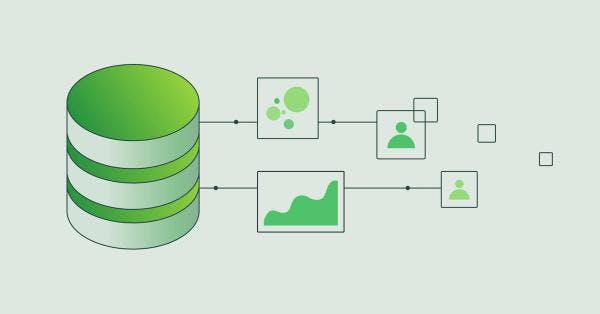
An AI agent is only as accurate as the customer data it acts on. The Composable CDP provides this foundation — a governance and activation layer that sits directly on the existing data warehouse.
This foundation provides critical inputs for AI agents before any campaign logic touches your data. These inputs include:
- Rigorous data quality enforcement: guarantees agents make decisions based on clean, reliable data.
- Strict access controls: maintain data security and prevent unauthorized usage.
- Identity Resolution: ensures agents act on accurate, unified customer profiles.
This layer sits on infrastructure you already own. Therefore, the AI context layer remains under your control. It's never copied into a vendor's proprietary system.
Operational brand knowledge
Operational brand knowledge is approved, brand context that agents can query in real time. Unlike static brand guidelines buried in a shared drive, operational brand knowledge is a live, machine-readable repository of your brand’s voice, approved claims, and strategic guardrails that agents can query in real time.
Without this governed context, agents may generate technically coherent content that's functionally useless. The result is content that’s off-brand, off-voice, or in direct conflict with the active campaign strategy.
The stakes are high. Across 26 top-tier frontier models tested in Stanford's latest accuracy benchmarks, hallucination rates range wildly from 22% to 94%.
A baseline failure rate of 22% (at minimum) for ungoverned AI agents is disastrous for brand campaigns. By embedding knowledge as a queryable foundation, you ensure that every agentic output is structurally sound and strategically aligned.
The hidden failure modes of agentic marketing
Speed without proper guardrails introduces risk. Three failure modes appear consistently across agentic marketing deployments.
Failure mode 1: ungoverned customer data
Agents operating on ungoverned customer data generate sophisticated, albeit flawed targeting. To the untrained eye, the output looks like precision hyperpersonalization. In reality, the targeting relies on fragmented identity data and outdated customer profiles. Consequently, that "hyperpersonalization" misses the mark.
This architectural failure remains invisible until you notice a drop in campaign performance. You may also notice suppression errors or compliance risks. Relying on disconnected data silos guarantees that your AI marketing agent will optimize for the wrong audience.
Failure mode 2: missing brand context
As covered in the previous section, agents acting without operational brand knowledge produce sophisticated content that violates brand standards. The resulting creative assets appear high-quality and structurally coherent. Unfortunately, the tone, messaging, or visual identity is off. It doesn't align with the specific segment or lifecycle stage.
Marketing teams often misdiagnose this issue as a prompt engineering problem. However, it's a structural issue. Better prompts can only compensate so much. Worst of all, they require constant optimization every time the tone or messaging changes. The only scalable way to overcome this is through a governed brand context layer that informs the model of your current approved guidelines.
Failure mode 3: governing the wrong layer
Most agent governance frameworks focus on constraining the AI model's output. This approach targets the wrong pressure point in a marketing workflow. By the time an output filter reviews the content, the agent has already made the wrong targeting decision, the creative already reflects a flawed context, and both input and output tokens have been wasted. With output-layer governance, you avoid launching a flawed campaign, but you still waste the time and resources it took to generate one.
Foundation-layer governance actively solves both issues. It avoids flawed outputs by ensuring all inputs are grounded in unified, governed customer data and the current brand context layer, and it saves resources by filtering out bad input before processing rather than after. When evaluating platforms, you must assess whether agents are constrained after generating a mistake or governed safely before they take action.
A proactive governance POV
Effective governance enables growth by securing the foundation before execution begins. By governing the data pipeline and the brand context layer, marketing teams can allow AI agents to operate freely within a secure perimeter. Platforms relying solely on output-layer governance still require extensive human review at every decision point. This bottleneck makes scaling harder.
Foundation-layer governance makes unreviewed agent execution at enterprise scale safer. Governing the inputs ensures that performance tracking yields actionable, trustworthy insights. Therefore, marketing leaders should view proper data architecture as the engine for safe campaign optimization.
Evaluating an AI agent for marketing automation
The following is a practical evaluation framework to help you choose the right agentic marketing platform. It outlines what questions to ask after the product demo, what a good answer looks like, and what red flags to avoid.
Criterion 1: governed customer data foundation
**Question to ask: **Does the platform integrate natively with a Composable CDP?
What good looks like:
- Customer data remains secure within the enterprise's own data warehouse, eliminating the need for redundant storage or risks of vendor lock-in
- The platform applies Identity Resolution, access controls, and data quality enforcement prior to activation
- The platform activates insights directly from the infrastructure the customer already controls
Red flags to avoid:
- Marketing teams require constant data engineering support to define audiences or access performance data
- The vendor requires data to be copied into their proprietary storage environment
- The platform lacks a transparent Identity Resolution layer
Criterion 2: brand context layer
Question to ask: How does the platform structure and query brand context?
What good looks like:
- Brand guidelines, approved marketing claims, voice rules, and audience parameters exist as a live, queryable brand context layer
- The operational layer dynamically informs the agent's decisions in real time without requiring complete model retraining
- Marketers can update guidelines to adjust campaign performance whenever they need to
Red flags to avoid:
- Generated content variants consistently require manual human review to ensure brand safety
- The vendor defines brand context layer as a static document upload or a basic system prompt
- The platform offers no audit trail detailing how agents use brand rules
Criterion 3: governance architecture—foundation vs. model
**Question to ask: **Where does the platform enforce governance, at the data foundation or at the model output?
What good looks like:
- Agents operate safely within a governed perimeter that dictates access controls and approved marketing tasks
- The platform builds governance directly into the data and operational brand context layers
- Agents aren't restricted only by content filters after making a decision
Red flags to avoid:
- The platform lacks explicit data access controls or a structured brand knowledge architecture
- The vendor describes governance as content filtering or manual output reviews
- Marketers must review and approve every step of the agent's workflow
Criterion 4: manager-of-agents operating model support
Question to ask: Does the platform require marketers to manually configure automation rules, or does it support a manager-of-agents operating model? This model elevates the marketer's role to a strategic position focused on outcomes rather than operational minutiae.
What good looks like:
- Marketers focus on setting campaign goals, defining strict guardrails, and curating brand context while agents handle the execution
- The platform interface centers around goal-setting rather than rigid logic paths
Red flags to avoid:
- While the platform promises speed, the actual user workflow remains painstakingly step-by-step
- The software requires marketers to build complex trigger logic and sequential rules
- The interface lacks a mechanism for setting optimization goals
Criterion 5: data infrastructure compatibility
**Question to ask: **Does the platform operate on top of your existing data warehouse, or will you need to migrate?
What good looks like:
- The platform leverages a composable architecture to sit directly on top of your existing cloud data stack
- The Identity Resolution and brand context layers remain within your current secure infrastructure
- Technical adoption and implementation costs remain low
Red flags to avoid:
- The platform requires an extensive data migration project to work as it did in the demo
- The vendor controls the identity layer and proprietary brand knowledge storage
- Leaving the platform means abandoning your entire operational foundation
Managing agents for marketing campaign automation
Integrating agentic AI into your technology stack changes daily marketing operations. The inputs shift from manual tasks to high-level goals, and that operational shift turns modern marketers into managers of agents. Under this new paradigm, your primary responsibilities become curating operational brand knowledge, adjusting agent parameters, defining goals, and setting firm guardrails, while the agents handle the campaign execution that previously consumed your team's time.
Brand strategy, audience insight, creative direction, and performance interpretation remain human endeavors. Agents execute the heavy lifting, but you still dictate the strategic objectives and monitor performance to ensure alignment. Choose a platform that supports you in this new role.
Prioritize foundational architecture over the product demo
Use these five evaluation criteria to guide your next vendor conversation rather than relying on them for a post-purchase audit. This framework protects your investment when it shapes your selection process before signing the contract. While software demos are engineered to look flawless, your data architecture dictates whether a platform scales or collapses under pressure.
Making smart foundation decisions today creates compounding advantages. Ignoring the foundation locks teams into architectural debt that becomes increasingly difficult and expensive to reverse.
FAQs
What are AI agents for marketing campaign automation?
They are AI agents that reason, decide, and execute multi-step marketing workflows without a human triggering each step. Agents evaluate live conditions and adapt their marketing strategies based on predefined, high-level goals. Hightouch's Agentic Marketing Platform provides the environment where these agents operate safely on governed foundations.
What is the difference between AI agents and marketing automation?
The key distinction is autonomy and adaptation. Rules-based marketing automation reliably executes predetermined paths based on strict logic. AI agents evaluate real-time conditions and adapt their execution autonomously. Governance at the data and brand-knowledge foundation ensures this agent adaptation remains reliable and brand-safe at scale.
What foundation do AI agents for marketing campaign automation need?
Agents require two critical foundations: governed customer data via a Composable CDP and operational brand knowledge. Hightouch's Composable CDP provides zero-copy Identity Resolution and access controls, while the brand context layer offers real-time queryable brand knowledge. Both elements are strictly required to ensure accurate, on-brand outputs.