Developers have spent the past year directing AI to build apps, websites, and entire codebases by describing an outcome and steering the result, a practice called vibe coding. Marketers are now asking whether the same posture applies to campaigns, and the short answer is yes.
Vibe marketing is an AI-native way of working where marketers own strategy, taste, and judgment while AI handles execution: drafting, designing, testing, and shipping under that direction. One marketer can now cover ground that used to require a full team.
Speed, though, is a multiplier, not a strategy, and that distinction is where most of the vibe marketing conversation breaks down. AI executing in the wrong direction produces more of the wrong thing faster, not a better outcome. The version of vibe marketing that actually compounds rests on two foundations most of the hype skips: customer data so the AI knows who it is talking to, and a brand context layer so output stays on-brand at scale.
Highlights
- Vibe marketing is an AI-powered marketing operating model in which marketers direct execution while retaining strategy, judgment, and brand direction.
- Speed is a multiplier, not a strategy, and faster execution produces better outcomes only when the right foundations are in place.
- Customer data gives AI the context it needs, helping marketing campaigns reach the right audience with greater relevance. Hightouch's Composable CDP provides this foundation by reading directly from the data warehouse, zero-copy by default.
- A brand context layer (i.e., operational brand knowledge) keeps AI outputs grounded in approved messaging, tone, and brand standards.
- The marketer's role evolves into a manager of agents, setting goals and guardrails while AI handles much of the execution.
The part most definitions miss: what is vibe marketing?
Most definitions of vibe marketing describe it as another form of marketing automation, but that explanation leaves out a key part of the story. While marketers direct AI tools (or agents) to handle execution (e.g., drafting, designing, testing, and shipping), humans own marketing strategies, judgment, and brand direction. They delegate tasks, but still own the outcome.
This allows a single person to function as a full team since the execution no longer requires a long chain of handoffs.
How vibe coding inspired vibe marketing
The idea of vibe marketing began with vibe coding. According to IBM, “vibe coding” dates back to February 2025, when Andrej Karpathy introduced it to describe directing an AI tool to generate code rather than writing it manually.
Vibe marketing applies the same posture to campaigns and content: marketers describe an outcome — "launch an ad campaign around the World Cup targeting lapsed customers" or "build a re-engagement series for accounts that haven't logged in this quarter" — and AI creates the assets, selects the audiences, and ships the campaign under the marketer's direction. Speed and quality are equally important considerations that marketers must address with a robust foundation and guardrails to ensure goals are met.
Without a customer data foundation, AI can create marketing content that appears relevant but has no connection to the audience. Without brand knowledge, it can produce content that drifts from the brand messaging. Quality and authenticity are foundational concerns, not tooling problems.
Vibe marketing vs traditional marketing
Comparisons between traditional and vibe marketing tend to favor AI-powered vibe marketing, but only when the right foundations are in place.
| Dimension | Traditional Marketing | Vibe Marketing |
| Execution | Specialized roles hand off work in sequence | AI handles execution under one marketer’s direction |
| Speed | Campaigns take weeks across teams | Variations and assets ship in hours |
| Decision basis | Plans are set in advance and reviewed periodically | Live signals adjust the next action continuously |
| Unit of work | Build and complete the workflow | Define the goal and evaluate the outcome |
| How quality is enforced | Manual review | Standardization through a brand context layer |
How vibe marketing works
The buzz around vibe marketing can make it sound vague. In practice, it is goal-based execution applied at the individual level. The marketer defines the outcome. AI helps carry out the work needed to reach it.
From AI prompts to goals
The idea is not "type a prompt, get an asset." It is defining an outcome. That could mean improving 90-day retention or filling the demand generation pipeline. The AI then creates the campaigns, content, and ads needed to reach that goal — selecting audiences, generating creative, and choosing channels based on customer data and brand context.
The vibe marketer becomes a manager of agents
The human stays in the loop where judgment is required. Strategy, positioning, taste, brand-sensitive decisions, and final accountability still belong to the marketer.
This way of working is already taking shape. Microsoft’s 2025 report found that 844 of 9,037 surveyed leaders work at organizations using AI systems in a more advanced, agent-led way.
In this model, the vibe marketer becomes a manager of agents, overseeing AI agents that carry out parts of the work. As the name implies, their role shifts from operating flows to managing agents. They set goals, define guardrails, curate brand knowledge, and evaluate outcomes.
The compounding advantage
Every action creates an outcome signal that feeds the next decision. The longer the system runs on your data, the better those decisions become. The advantage endures because the customer owns the data and the brand knowledge underlying it. Those assets stay with the business rather than being locked in a vendor's model.
Why speed alone isn’t enough
Productivity is part of every marketer’s mantra, but increased speed without relevancy actually decreases productivity. Customer context is crucial to making every campaign relevant and maximizing open rates and conversions. Customer data is the foundation of your brand context layer, and it’s how you maintain clear brand standards across every piece of content you produce.
Without a brand context layer to drive your strategy, content can easily drift away from brand standards and miss campaign goals. Speed amplifies your direction, right or wrong, making the brand context layer and operational brand knowledge a foundational imperative.
The two foundations that vibe marketing needs
Whether vibe marketing fails or compounds depends on what lies beneath the AI. Two foundations decide which outcome you get: customer data, so agents know who they are talking to, and a brand context layer, so every output stays on-brand. Hightouch's Agentic Marketing Platform is built on both, so teams can adopt the pieces they need.
Marketing teams that want to implement vibe marketing need both foundations from the start. One without the other produces well-targeted generic content or on-brand but irrelevant content. Fast output becomes valuable only when those two foundations work together.
Customer data as the foundation A Composable CDP for customer context
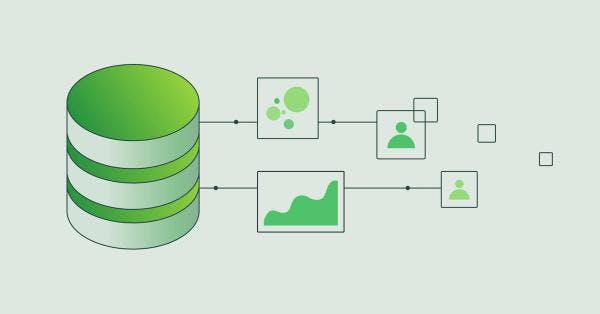
The first foundation is customer data, including behavioral signals, purchase history, engagement patterns, and identity data that tell agents who they are talking to. Customer data stays in the existing data warehouse. Hightouch's Composable CDP reads from it and does not store it — zero-copy by default. No freshness delays, no blind spots, no second source of truth..
This is what helps vibe marketing stay relevant. AI knows which segment will see an asset, what those customers have done before, and what they are likely to respond to. Beyond customer profiles, the context layer also pulls in campaign history and performance data from connected marketing systems, so agents have the full picture when making decisions. Customer Studio makes audience building accessible to marketers without engineering support.
Brand context layer
The second foundation is a brand context layer, and it’s Hightouch's primary differentiator. This operational brand knowledge is not a style-guide PDF saved in a shared folder. It refers to approved copy, tone references, messaging frameworks, and other brand assets processed into something AI can reason against in real time.
Hightouch’s Content Assembly draws from the brand context layer to generate on-brand content at scale. Every output is grounded in the brand context layer, keeping creative consistent whether the system produces ten variations or ten thousand.
Putting vibe marketing to work
Vibe marketing starts with creation. A marketer describes what they want, and AI builds it. The practical entry point is whichever creation workflow has the most friction today: ad campaigns that take weeks to produce variations, lifecycle campaigns that require engineering support to launch, or content that bottlenecks on a single copywriter.
Hightouch supports vibe marketing through creation tools that run on the same composable context — customer data from the warehouse, brand knowledge from creative systems, and campaign history from marketing channels. Teams can adopt individual products where execution slows them down first and expand from there. Once campaigns are live, optimization capabilities like AI Decisioning compound the results over time.
Examples of vibe marketing
Each example below follows the same pattern: a marketer defines a goal or concept, and AI creates the campaign assets, grounded in customer data and brand context. No sequential handoffs, no blank-prompt generation.
Launch an ad campaign from a cultural moment
A performance marketer wants to run a World Cup campaign targeting lapsed customers. With Ad Studio, they describe the campaign goal, select the audience segment from Customer Studio, and Ad Studio generates on-brand ad variations across formats, pulling from the brand context layer for creative consistency and from the Composable CDP for audience targeting. The marketer reviews, edits, and launches from a single workflow.
Build a lifecycle campaign from a goal
A lifecycle marketer wants to improve 90-day retention for a new product tier. With Lifecycle Marketing Studio, they set the retention goal and define the audience. The system creates the campaign, including emails, push notifications, and in-app messages with Content Assembly, generating on-brand content variations for each touchpoint. The marketer approves the creative, sets guardrails, and the campaign goes live.
Scale content from existing brand assets
A content marketer needs fifty email variations for a seasonal promotion across five audience segments. Content Assembly generates personalized variations from approved brand assets with existing copy, imagery, and tone guidelines, rather than starting from scratch. Every variation stays on-brand because the system reasons against the brand context layer, not a generic language model.
Optimize outcomes over time
Once campaigns are live, AI Decisioning uses reinforcement learning to optimize which content, offer, channel, and timing works best for each individual customer. This is the optimization layer that makes vibe marketing compound. It’s not a creation tool itself, but the capability that turns fast output into continuously improving performance.
WHOOP learned the value of that approach after achieving a 10% lift in cross-sell conversions through AI Decisioning. As Aoife O'Driscoll, lifecycle marketing lead at WHOOP, says, "It would take years to get to the level of insight that we've garnered in a matter of weeks."
The Agentic Marketing Platform ties these capabilities together with creation tools for the vibe marketing workflow and optimization capabilities that compound results over time — all running on the same customer data and brand context.
Building foundations for speedy success
Anyone can point AI at a campaign and get fast output. What separates a system that compounds from one that just makes noise is what sits underneath it: customer data so the work stays relevant, and a brand context layer so it stays on-brand.
Speed without those two is just a quicker way to ship the wrong thing. The teams that build both foundations first, then let AI create campaigns, content, and ads from high-level goals, will pull ahead as their systems learn from every customer interaction.
Treat vibe marketing as an operating model, rather than a shortcut, as your job becomes that of a manager of agents: set the goals, define the guardrails, and let the system run the plays. To see what that looks like with both foundations built in, explore Hightouch's Agentic Marketing Platform.
FAQs
Q1: What is vibe marketing in simple terms?
Vibe marketing is an AI-native way of working where marketers use AI to execute. At the same time, they retain strategy, judgment, and brand direction. It allows one marketer to operate at the level of a full team, provided the right data and brand foundations are in place.
Q2: How is vibe marketing different from traditional marketing?
Traditional marketing relies on specialized roles, handoffs, and planned-in-advance workflows. Vibe marketing places execution under a single marketer who oversees AI and uses live signals to guide decisions throughout the campaign. The focus moves from completing workflows to defining goals, setting guardrails, and evaluating outcomes.
Q3: What AI tools do you need for vibe marketing?
Hightouch Agentic Marketing offers a complete solution with customer data and a brand context layer. The Composable CDP connects to your warehouse for customer context, and the brand context layer ingests assets from your creative and marketing systems for brand governance. Creation tools like Ad Studio, Lifecycle Marketing Studio, and Content Assembly are built on these foundations, with AI Decisioning optimizing outcomes over time. Teams can adopt individual products and expand from there.
Q4: What role do marketers play in vibe marketing?
Marketers remain responsible for strategy, oversight, brand direction, and final accountability. AI handles more execution, but the marketer sets goals, defines guardrails, curates brand knowledge, reviews outputs, and evaluates outcomes. The role becomes more like a manager of agents than a task-by-task operator.