A year ago, almost nobody used the term “agentic.” Now almost every vendor does. The pitch sounds the same whether it comes from a small AI tool, an old suite, or an infrastructure company, making it almost impossible to decipher which will actually help improve your team’s productivity, instead of just giving them another tool to figure out.
When it comes to agentic marketing platforms specifically, there's an easier way to sort them out than comparing feature lists. Most of these products run on the same few AI models and LLMs, which makes the agents themselves the least different thing about them. What changes from vendor to vendor is what the agents can see and what they're allowed to do.
What is an agentic marketing platform?
An agentic marketing platform is software that uses AI agents to plan, run, and improve multi-step marketing work toward a goal you set. Instead of a marketer coordinating every step by hand, the platform splits the goal into tasks like analysis, audience building, content, compliance review, launch, and measurement, then works through them with people approving along the way.
The key idea is delegation. You set the goal, the limits, and the checkpoints. Agents do more of the hands-on work and bring back recommendations or finished work for you to review.
Most marketing software already has automation features. The real difference between automated and agentic is between finishing a task and chasing an outcome. A rules engine runs the steps you wrote down. An agent works toward the result you asked for, picks its own steps, and changes course when the first try doesn't work.
It's worth defining agent too, since the word gets used loosely. Here it means software that can think through a workflow, pull in context and tools as it goes, act inside real systems, and react to what comes back. Take away any one of those and you have something useful, but not an agent.
How it differs from a copilot, a CDP, and marketing automation
These categories overlap, and treating them as separate boxes leads to bad evaluations. An agentic marketing platform can contain generative AI, automation, decisioning, and a customer data platform. What matters is how those pieces work together, and whether the system can finish the job.
| Category | What it usually does | What an agentic marketing platform adds |
| Generative AI tool | Writes copy or makes images from a prompt | Works from context it keeps, and handles more than the content step |
| Marketing copilot | Helps with a task while you run the workflow | Takes on bigger pieces of the workflow while you stay in control |
| Marketing automation | Runs rules and journeys you set up in advance | Works toward a goal, picks actions, and adjusts to results |
| CDP | Unifies customer data and sends it to channels | Turns that data into recommendations and campaigns that actually launch |
| Point AI feature | Improves one narrow task | Connects strategy, creative, audiences, channels, and measurement |
Four principles separate a platform from a label
The Composable CDP era earned its place partly on four organizing principles, which gave buyers a scorecard to hold up against anyone claiming the category. Agentic marketing needs the same discipline, for the same reason. The label is easy to adopt. The architecture under it is not.
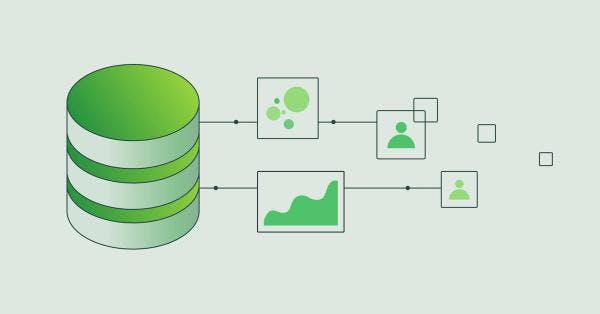
Your customer data stays where you already keep it. The agent should read from your warehouse when it needs an answer, and your data team should be able to see every read. Ask about this early. A platform that needs your customer data copied into its own storage has made a decision you'll feel later, when the two copies disagree and someone has to work out which one is right.
Your brand knowledge becomes something agents can look up. Knowing the customer is only half of what an agent needs. It also has to know your business: what it looks like, what it sounds like, what's worked, what's failed, and what your brand team would never approve. That knowledge sits in DAMs, CMSes, guidelines decks, and the heads of senior creatives. A brand context layer turns it into something an agent can query while it works, which is a different thing from uploading a PDF of brand guidelines at the start of every project. Building one takes real configuration work, usually with people who sit with your team and encode the rules brand by brand. Without it, agents produce work that's accurate and off-brand at scale, and review becomes the bottleneck.
You bring your own AI model. The model landscape has reordered itself more than once in the past two years and will do it again. A platform that connects to Claude, ChatGPT, Gemini, and other enterprise AI through open interfaces lets you change your mind by changing a setting. A platform that makes its money on its own model will likely not provide the flexibility your team needs over time.
You can buy one piece. A performance team should be able to buy the thing that fixes this quarter's problem without the whole marketing org standardizing on one vendor first. The bundled suites of the last era made companies buy everything and use a fraction of it, and the agentic versions are shaped the same way with new names on them.
Two more things sit alongside the principles.
The agents have to cover the whole chain. Research, planning, audience building, creative, launch, and measurement are the actual sequence. A system that handles three of those six hands the coordination work back to the person it was meant to help.
Governance has to be built in, not switched on. Autonomous doesn't mean unsupervised. The enterprise systems worth buying put approval points, permissions, and audit trails inside the workflow, and let you require a person to sign off on anything before a customer sees it.
What an agentic marketing platform does
An agent finds a valuable audience, advertising, or lifecycle opportunity nobody thought to look for. It recommends a campaign or a test and shows its reasoning. It puts together on-brand content from assets you've already approved, and adapts that creative for different channels and formats. It builds audiences, suppression rules, and journeys. It runs brand and legal checks before a person reads anything, launches through the systems you already use, and suggests the next move once results come in.
No single one of those is all that valuable on its own, but stringing them together without a handoff at every step is.
From a goal to a live campaign
Say you want to drive more repeat purchases from high-value customers before the holidays. You state the goal, the limits, and where you want to approve.
Agents read the warehouse for purchase history, how recently people bought, and how they responded to past campaigns. They pick the audience and the suppression rules that keep the offer away from anyone who just bought. They propose an offer and a channel mix, and show the performance history behind it. They assemble content from approved assets, adapt it for email, push, and paid social, and check it against your brand rules and approved claims.
The work comes to you to review. Once you approve, it launches through your connected systems, and the results come back so the next recommendation starts from better information.
You made every decision that needed judgment. What changed is how much coordination sat between your decision and the campaign going out.
How to evaluate an agentic marketing platform
Nine questions that help you evaluate an agentic marketing platform past the demo:
- Where does our customer data sit when the agent reads it, and can our data team see every read?
- Where does our brand knowledge live, and can anything besides this vendor's product read it?
- Which AI model runs this, and what happens when we want a different one?
- Can the agents act in our channels, or only recommend?
- Can we buy one product, or does using one mean buying three?
- What comes back after a campaign runs: results, approvals, rejections, or nothing?
- Where are the approval points, the permissions, and the audit trail?
- Can the platform tell us why it made a recommendation?
- Does it cover both paid and owned channels, or is one of them on the roadmap?
How we think about it at Hightouch
Hightouch is the Agentic Marketing Platform, powered by the industry-leading Composable CDP. We spent six years building the data infrastructure that lets marketing teams build their own audiences and send data to every channel, and that's the foundation agentic marketing runs on. The Composable CDP keeps customer data in your warehouse, zero-copy, and agents read it from there.
On top of that sits the brand context layer. We turn your raw brand knowledge into something agents can query, and host it in a managed instance of the cloud and data platform you already use, across Databricks, Snowflake, and GCP. Your DAM, CMS, and CRM stay where they are. Getting there takes hands-on work. Our forward-deployed creative team sits with your designers and configures your brand rules one by one, which is why the output clears your bar rather than approximating it. Any downstream system or agent can reach the layer through MCP and API, which is also how we connect to Claude, ChatGPT, and Gemini.
Hightouch Ad Studio covers paid and performance, and builds creative in editable layers, so you can change a headline or swap a product shot without regenerating the whole asset. Hightouch Lifecycle Marketing Studio covers lifecycle and CRM, including audiences, journeys, content, and decisioning. Content Assembly lets you re-use your existing, approved assets rather than generating net-new imagery.
The marketer becomes a manager of agents
What's happening in marketing looks a lot like what happened in engineering with coding agents. The rare skill stops being building the campaign and starts being saying what good looks like, writing it down in a form a machine can use, and judging what comes back. That asks more of your taste, not less, because your judgment now applies to a hundred pieces of work instead of one.
Which is why we'd argue the point was never speed. Speed is real and it matters, mostly because it lets you test more and learn faster. The reason to care is that you can finally treat customers as individuals at a scale that used to cost too much. Mass marketing was a compromise forced by what production used to cost, and that cost is coming down for companies building on the right foundation.
Explore how Hightouch Ad Studio puts customer data and brand context to work in paid media.
Frequently asked questions
What is an agentic marketing platform? An agentic marketing platform is software that uses AI agents to plan, run, and improve multi-step marketing work toward a goal you set. You set the objective, the limits, and the approval points, and agents handle the hands-on work across analysis, audiences, content, launch, and measurement.
How is an agentic marketing platform different from marketing automation? Marketing automation runs rules and journeys someone set up in advance. An agentic platform works toward a result you asked for, picks the steps to get there, and adjusts based on context and outcomes. Most agentic platforms include automation, running underneath the agents rather than instead of them.
Is an agentic marketing platform the same as a marketing copilot? No. A copilot helps with single tasks while you run the workflow from end to end. An agentic platform takes on larger pieces of that workflow, including launching in your connected systems, while you keep the goal-setting, the review, and the approval.
Is an agentic marketing platform the same as a CDP? No, though they're closely related. A CDP unifies and governs customer data and sends it to channels. An agentic marketing platform sits on top and turns that data into recommendations, content, and campaigns that launch. A Composable CDP keeps the data in your own warehouse, so agents can read it without creating a second copy.
What data does an agentic marketing platform need? Customer data, campaign history, brand guidelines and approved assets, product and catalog data, business rules, and channel results. Customer data tells the agent who the marketing is for. Brand knowledge tells it how the work should look and sound. Miss either one and the output fails on the other.
Can AI agents launch campaigns without human approval? Some platforms allow different levels of autonomy, but enterprise teams should look for approval points, permissions, compliance controls, and audit trails they can configure, rather than a choice between fully manual and fully automatic. At Hightouch, every AI-generated asset needs a person to sign off before it goes live.
What should I look for when evaluating an agentic marketing platform? Where your customer data sits when agents read it, whether your brand knowledge can be read by systems beyond that one vendor, whether you can choose your own AI model, whether agents can launch or only recommend, whether you can buy one product at a time, what comes back after campaigns run, and how approvals and audit trails work.
What is an example of an agentic marketing platform? Hightouch is one. It pairs a Composable CDP that keeps customer data in your warehouse with a brand context layer that makes your brand knowledge available to agents, and gives marketers two places to work: Hightouch Ad Studio for paid media and Hightouch Lifecycle Marketing Studio for lifecycle and CRM.